

Millennial Dating Trends That Boomers Will Never Understand
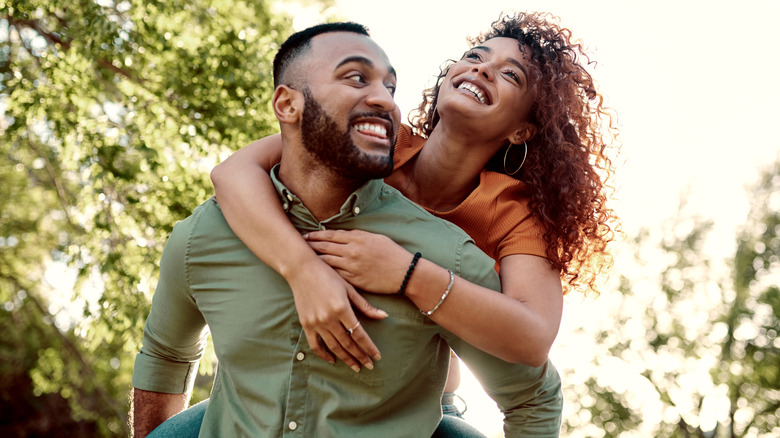
The differences between baby boomers and millennials have been highly catalogued, with the two generations disagreeing on everything from the appeal of avocado toast to the importance of therapy. Even though baby boomers aren't letting age stifle their love lives, the older generation can confidently claim its approaches to dating and romance are distinct from those of millennials, too.
As a reminder, the term baby boomer refers to individuals born from 1946 to 1964. The cohort came of age during the '60s and '70s, and is most known today for its more traditional values and perceived technological illiteracy. Meanwhile, millennials were born from 1981 to 1996, reaching the age of majority throughout the 2000s and early 2010s. The age group is sometimes referred to as digital natives, as they grew up alongside major technological advancements, such as the development of the internet and the widespread use of cell phones.
With just these differences in mind, it's no surprise that there are quite a few millennial dating trends that boomers will never understand. From changing social mores to digital developments, the landscape of love has definitely shifted in the past several decades.
Most boomers won't relate to the use of dating apps
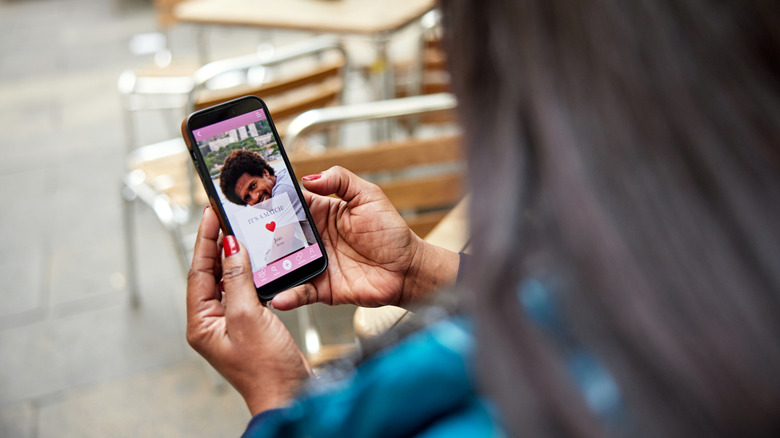
First off, boomers definitely won't resonate with how technology has shaped modern romance. The widespread use of the internet allowed users to connect with those outside of their immediate social circle, with everything from chatrooms to MySpace being used to find love. Dedicated dating websites sprang up in the '90s, with Match debuting in 1995 and eHarmony in 2000, only becoming more common.
The launch of Tinder in 2012 kickstarted the dating app boom, with the platform creating "swipe right" terminology that has become modern dating slang. Since then, platforms like Hinge, Feeld, and Bumble have become popular, with millennials being among the most common users. In 2016, Match's annual Singles in America study reported that millennials were 57% more likely than other generations to have created an online dating profile. According to Statista, the cohort still accounted for 40% of dating app users in 2025, outnumbering Gen Z.
While there were non-traditional ways to meet a significant other before the internet, the vast majority of couples naturally connected through in-person events and relationships. Specifically, the rise of co-ed schooling, afterschool jobs, and the entertainment industry shaped the ways that baby boomers dated in the '60s and '70s, with the majority of couples meeting via social groups and shared friends following WWII. With all this in mind, it's only natural that this millennial-linked dating trend is foreign to older generations.
Perceptions of pre-marital sex have undoubtedly changed

Millennials and baby boomers alike are probably familiar with the concept of hookup culture — the idea that young people were having casual sex at high rates, especially on college campuses. While writers and journalists discussed the development in the context of feminism and shifting American values — the latter especially appealing to boomers — the tropes surrounding hookup culture seem to be more of a fear-mongering myth than a widespread millennial experience.
Apps like Tinder developed a reputation of being especially oriented toward short, sexual connections, but that doesn't mean that every young person was opting for casual sex. In fact, Smithsonian Magazine shared a study in 2013 that found that 59.3% of college students polled from 2002 to 2010 reported having sex at least once a week or more, compared to the 62.5% of college students polled in 1988 to 1996. The CBC echoed the idea that young adults were having less sex than previous generations in findings shared in 2016, asserting that the second half of the millennial cohort especially trended toward sexual inactivity in early adulthood.
In reality, conversations and perceptions around premarital sex are what have changed most since baby boomers reached their majority, with both the sexual revolution and the increased accessibility of birth control largely reshaping cultural norms. Overall, millennials are more accepting of premarital sex than previous generations, but have fewer partners on average.
Millennial couples often move in together without being married
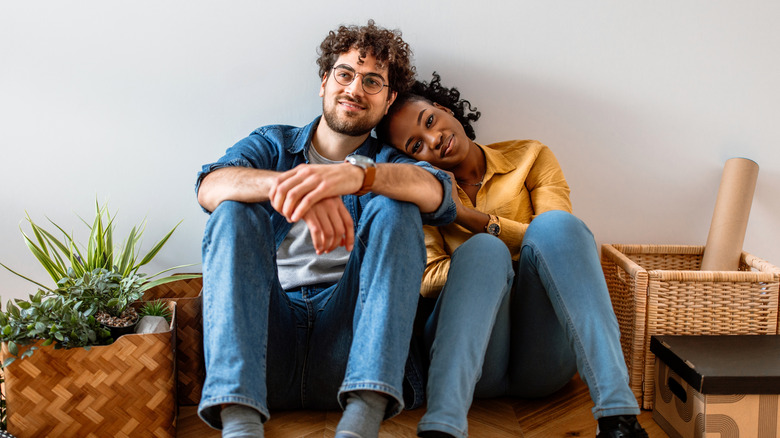
Cohabitation, defined as the practice of couples living together without being legally married, is another dating trend that sets millennials apart from baby boomers. The Pew Research Center reported that 12% of Generation Y was living with an unmarried partner in 2019 compared to 8% of Gen X in 2003. Though there is limited data on the cohabitation practices of baby boomers, the custom didn't start to become relatively normal until the late '80s.
The act of cohabitation isn't the only thing that boomers won't resonate with, as millennial couples have distinct motivations for moving in with a significant other. Instead of the practice being seen as a trial run for eventual marriage, many millennials view living with a partner as practical. "The lack of normative constraints, convenience, and economic reasons are all likely and potentially intertwined underlying factors of this phenomenon," Dr. Alina Pelikh explained in a post from the UCL Institute of Education.
In contrast, dating norms of previous generations were largely mandated by the traditional and religious values placed on marriage. Scholars point to the many social movements of the 1960s, including the sexual revolution and feminism, as integral to eventually destigmatizing cohabitation. Even with evolving social norms, the Pew Research Center reported in 2019 that 64% of individuals 65 and older believed that long-term couples oriented toward marriage were beneficial to society.
Millennials get married later in life
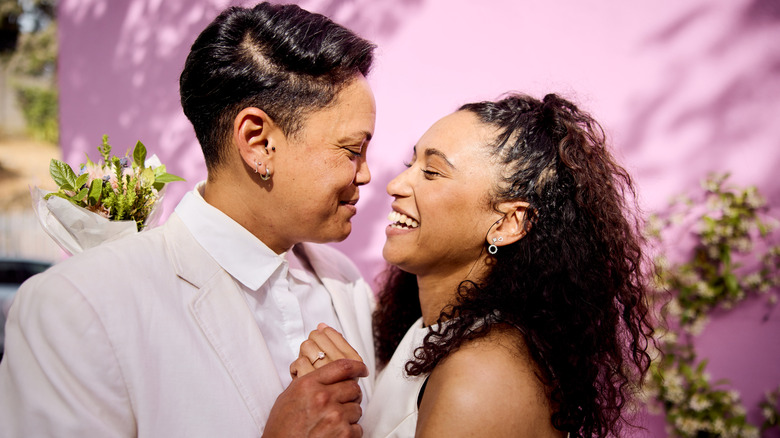
Increased cohabitation naturally comes alongside shifting marriage rates: another millennial dating trend that boomers won't understand. Generation Y is choosing to walk down the aisle later in life than previous generations, with the Pew Research Center reporting that in 2019, the average woman married at age 28 while the average man wed at 30. This is a seven-year increase compared to marriage statistics of 1968.
While older generations might be quick to think that millennials are leaving a traditional American value behind, these evolving practices don't necessarily mean that the digital natives are turning their backs on the institution altogether. Instead, many millennials are focusing on personal development and financial stability as a prerequisite to the commitment of marriage. "For many couples, marriage is something you do when you have the whole rest of your personal life in order," sociologist Andrew Cherlin told The New York Times in 2018. "Then you bring family and friends together to celebrate."
In contrast, marrying as a young adult was the norm when baby boomers were reaching their majority in the mid-'60s and '70s. As mentioned, the cultural norms around cohabitation and premarital sex were definitely influenced by the social movements of these decades, but marriage remained an early adult milestone for many until these changes took effect. Many women still faced obstacles that limited economic independence, too. Overall, the trend toward later-in-life marriages definitely belongs among millennial wedding trends that boomers will never understand.
Modern dating slang will leave boomers scratching their heads

With how much dating has changed, the language of love has evolved right alongside it. Swiping terminology is one already mentioned, with "swiping left" meaning to pass on someone while "swiping right" reflects interest. Since the term originated from dating apps, it's one of many that may leave boomers scratching their heads.
"Catfish" is another term born from the digital age. It means someone who misrepresents their identity online, typically in a romantic context, but can be used to refer to the act of being duped by such a person, too. The word originated from the 2010 documentary "Catfish," in which Nev Schulman documented his journey of meeting the woman he connected with online in person. Though she represented herself as a young single, Schulman's romantic connection turned out to be a married woman in her 40s. An MTV reality series was adapted from the documentary, and the term quickly became shorthand for the phenomenon.
Lastly, "ghosting" is a millennial expression that will likely elude older generations. Meaning to abruptly end a connection by cutting off contact, the phenomenon became increasingly popular with the rise of online dating and the instantaneous nature of messaging. The practice made headlines when Charlize Theron allegedly broke her engagement to Sean Penn via ghosting in 2015, and entered the Merriam-Webster dictionary in 2017. For even more modern dating terms and practices foreign to boomers, check out the dating trends that majorly shaped 2025.