

Millennial Wedding Trends Boomers Will Never Understand
Wedding traditions have undeniably changed throughout the twentieth and twenty-first centuries, with generational lines marking some notable shifts. While Gen Zers were old enough to influence the outdated trends to skip for 2025 nuptials, the oldest Millennials came of marrying age in the 2000s. Typically cited as being born from 1981 to 1996, this generation is known for adapting to the rise of the internet and coming of age during economic uncertainty, with the tragedy of 9/11 being a defining event for the age group.
At the same time, they've been unable to escape the scrutiny of other cohorts. Long before the side vs. middle part debate of TikTok, older generations like Baby Boomers and Gen Xers accused Millennials of lacking a work ethic and forsaking traditional American values. Criticisms lobbed at the '80s and '90s babies are often tied to cultural and economic changes, many of which inevitably shaped the cohort's wedding choices.
In this way, it's no surprise that Boomers are left scratching their heads at some of the trends that dominated wedding culture throughout the 2000s and 2010s. Born from 1946 to 1964, Boomers grew up during a period of economic expansion and major geopolitical and social change, but are most often characterized as being financially conservative and technologically illiterate. While they may not resonate with the way weddings have changed, hopefully they can still pick up a sparkler and enjoy the day.
Millennials shifted away from traditional religious ceremonies
As Millennial couples began getting married in the 2000s, wedding culture majorly shifted away from the religious values and formal traditions that reigned supreme for older generations. For Baby Boomers who began marrying in the '60s, formal weddings in churches and low-key backyard ceremonies were the norm. "This generation valued religious traditions and formal settings, seeing marriage as a societal milestone with deep roots in their faith communities that complied with social expectations," Steven Greitzer, founder of the wedding planning app, Provenance, told Newsweek.
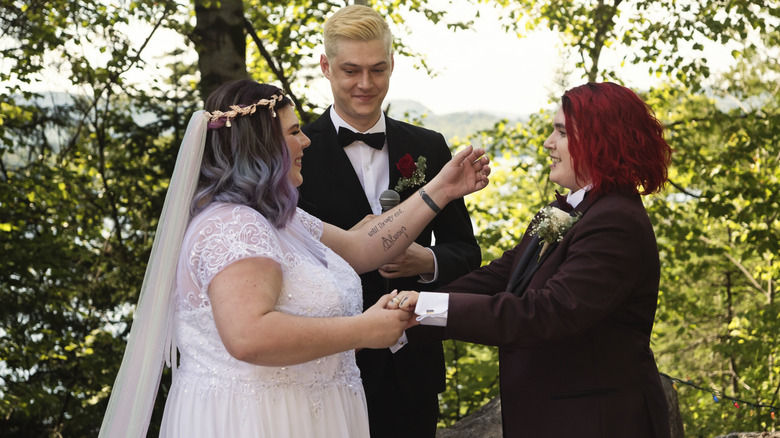
In contrast, Millennials welcomed non-religious officiants into the mix, breaking religious tradition in exchange for intimacy. As the rise of the internet made online ordination readily available, couples opted to have a family member or friend officiate vow exchanges. This trend has proven to be a sustained evolution of wedding culture, with Zola reporting that 86.97% of polled couples in 2024 rated the practice as "in".
In terms of venues, many Millennials traded in traditional churches in favor of barns, wineries, industrial lofts, and destination locales. While the sidelining of religion and the rise of interfaith marriage play a role in this change, experts also point to the older marrying age and financial independence of Millennial couples alongside an emphasis on aesthetic themes and personalization. As sociologist Ellen Lamont told The Atlantic in 2018, "The social norms that guided marriage have become more negotiable, flexible, and individualized."
Rustic decor dominated millennial wedding pinterest boards
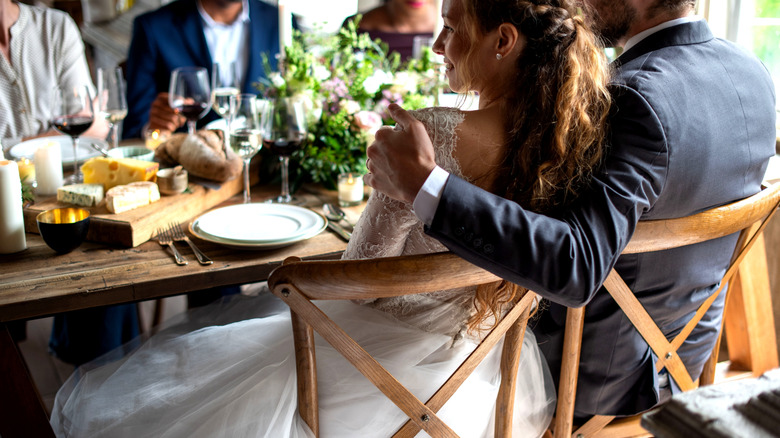
With the personalizations that came with Millennial weddings, aesthetic themes like rustic chic, also known as burlap and lace, rose in popularity. As mentioned, barns were a popular venue choice throughout the 2010s, with elements like mason jars, baby's breath bouquets, and exposed wood serving as recurring decor. Things like naked cakes, boho wedding dresses, and flower crowns are also associated with this theme.
@misselsaot the last one TELL ME WE WERENT ALONE 🥲 I love this trend and loved our wedding and it was so affordable 💕 #millennial #wedding #millennials #engagement #weddingtrend #2013 #whimsy #millennialsoftiktok
♬ We Will Never Die (feat. Kody Redwing and The Broken Hearts) (Cut 1) – Kyle Gordon
The rise of DIY weddings is one possible explanation for this particular wedding trend. While there was a certain grandiosity to the traditional weddings of the Baby Boomer era, the costs associated with those special days have significantly increased, with this price hike largely driven by the expansion of the wedding industry. In this way, many soon-to-be-marrieds took to DIY-ing elements of their special day while pulling inspiration from sources like Pinterest and Buzzfeed. Twine-wrapped mason jars and burlap table runners lend themselves well to DIY decor, illustrating that the theme's popularity was partially motivated by practicality.
While Baby Boomers may not resonate with this rustic wedding aesthetic, it seems that Gen Z and Millennials are ready to revive the trend for the late 2020s. Not only did barns and ranches rank high as venue choices in Zola's 2026 trend report, but experts also note that the southern-inspired decor is getting a modern and elegant makeover. "Strip away the barrels, bales, and chalkboard signs, and fully lean in through thoughtful branding," Lynn Easton, wedding planner and venue owner, recommended to Vogue.
Millennials have utilized the internet for wedding planning
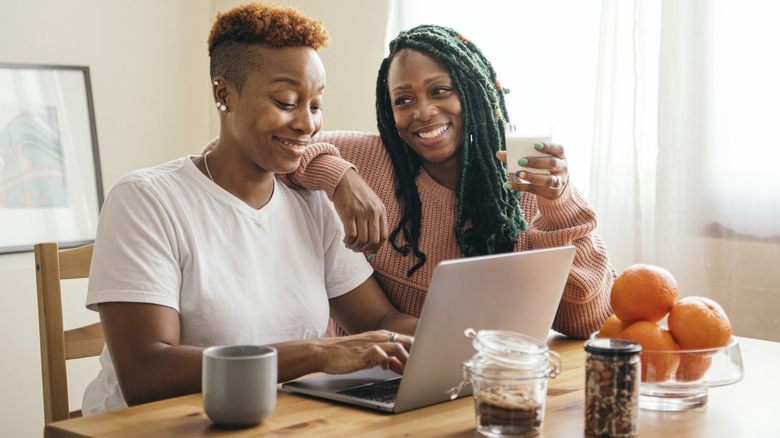
Social media is another element of Millennial weddings that Boomers might not relate to. Older generations relied on bridal magazines, window shopping, and samples to help plan the details of their special day. In contrast, with the major technological advancements of their lifetime, the '80s and '90s babies were the first generation to really incorporate the internet into their wedding planning process.
Blogs were one of the earliest online resources available to Millennials, with photo platforms and social media sites quickly following suit. After its launch in 2010, Pinterest became another vital part of the wedding planning process, with the scrapbook-like platform hosting more than 38 million boards dedicated to wedding planning by 2015, per The Washington Post. Of course, apps like Instagram and TikTok have become similar wedding planning go-tos. The use of digital resources to aesthetically curate ceremonies and receptions undoubtedly contributed to the overall increase in personalized, DIY weddings.
Beyond inspiration, technology significantly streamlined the wedding planning process throughout the 2010s. Websites like The Knot and Zola became informational and resource hubs, while social media has helped contemporary couples instantly connect with vendors and photographers. Personal wedding websites, used for RSVPing, info sharing, and photo hosting, have become increasingly popular as well, with the number of couples utilizing such a resource increasing from 59% in 2015 to 74% in 2018, per The New York Times.
The hipster wedding was a uniquely Millennial trend
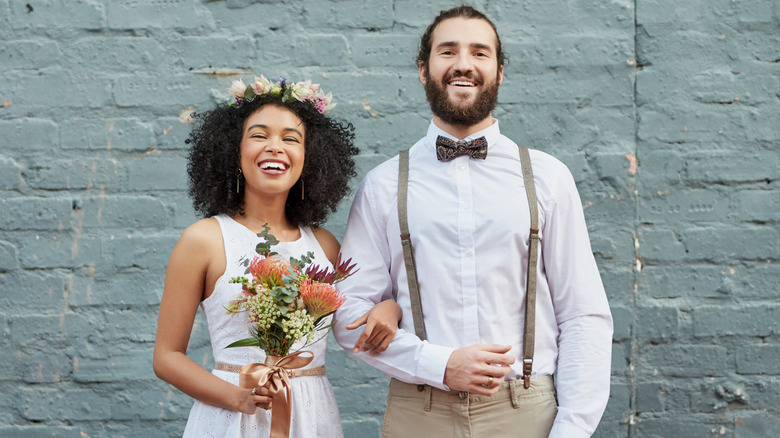
One aesthetic that Millennials will recognize is the "hipster" wedding, which combined retro elements with 2010s boho flair and quirky personalizations. If you're unfamiliar, the term hipster surfaced out of music subcultures of the twentieth century to describe someone with aesthetic taste outside of the mainstream, but morphed into the stereotype of the urban Millennial wearing vintage fashion, eating overpriced avocado toast, and listening to indie music. While the term was often used negatively, it also inspired a specific style that translated into a popular aesthetic for Millennial weddings beginning in the late 2000s.
@shannonlabare But the playlist was excellent
These events often took place in outdoorsy settings or offbeat urban venues like distilleries or industrial lofts. Vintage items like cameras, luggage, and bikes were staple statement decor, while quirky animals, mustaches, and pop culture references made for common motifs. A handcrafted feel was also common in 2000s and 2010s weddings, with details like mismatched chairs, chalkboard signs, and eclectic picture frames, while signature cocktails and unexpected party favors added even more customization.
Attire is another important part of the Millennial wedding aesthetic. Grooms often wore suspenders or vests paired with manicured mustaches or full beards, while brides opted for vintage, boho-inspired gowns or unique dresses that defied tradition. In turn, some weddings encouraged guests to wear their vintage best. When compared to the more traditional ceremonies and receptions of older generations, it's not surprising that Boomers don't quite understand this quirky trend.
Boomers won't relate to the ease and expectation of social media
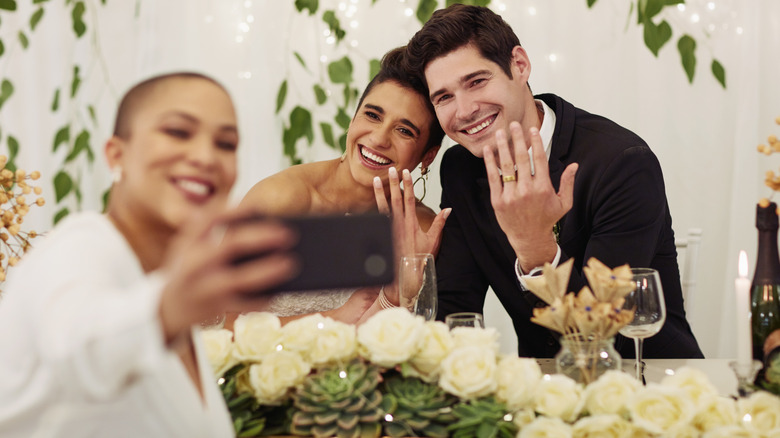
When it comes to technology's impact on Millennial weddings, social media went beyond planning and inspiration. While older generations relied on film photographers, digital advancements have made snapping photos and sharing them exponentially easier. Some contemporary weddings even incorporate social media directly into their special day, encouraging attendees to share snapshots with personalized hashtags to make a virtual album.
The shift away from traditional photography makes sense when considering the average amount spent on a wedding photographer has steadily increased over the decades. When recreating her parents' 1974 wedding in 2017, Buzzfeed writer Meg Keene calculated that the cost of photography had increased 4,900%, going from $50 to $2,500. So, turning to a DIY approach for wedding photography is a cost-effective alternative. While this has given brides and grooms a new way to commemorate their vows and share a major milestone, it also paved the way for higher expectations, with "perfect moment" syndrome having the ability to sabotage anyone's special day.
Those sharing weddings online get more eyes on their nuptials, and some experts suggest that this has contributed to the rising costs of weddings, pushing budgets to create a curated image of the perfect day, whether to live up to internet inspo or to share the perfect picture online. Overall, the Millennial era of marriage brought many changes and trends to the wedding landscape, which have had a lasting impact on the industry.