

5 Hair Mistakes You Don't Want To Make If You're Over 40
We may receive a commission on purchases made from links.
Our hair goes through a lot in a lifetime. "As we age, hair undergoes significant changes driven by genetics, hormones, and reduced cellular activity," Penny James of the Penny James Trichology Center exclusively confirms to Women.com. "Follicles produce thinner, finer hairs (vellus hair) rather than thick, pigmented terminal hairs, often reducing overall hair volume," she adds. This can sometimes present as female-pattern baldness, as there's less hair (and the hair that's there isn't so thick) to cover the scalp. How our hair grows changes too. "The hair growth cycle slows, meaning hair spends less time in the growing (anagen) phase and more time in the resting (telogen) phase, resulting in slower growth and increased fragility along the hair shaft," James says.
With so much going on with our locks, it's important to take extra care of our hair in our 40s and beyond. But there are a few mistakes many older women make that could be detrimental to their hair's health and look. From not ensuring their locks are properly moisturized to failing to cut back on heat products that can result in the tell-tale signs of damage, it's too easy to not treat our hair the way it deserves. But it's not too late to get your mane back to its best.
Holding on to long locks (if your hair is thinning or damaged)
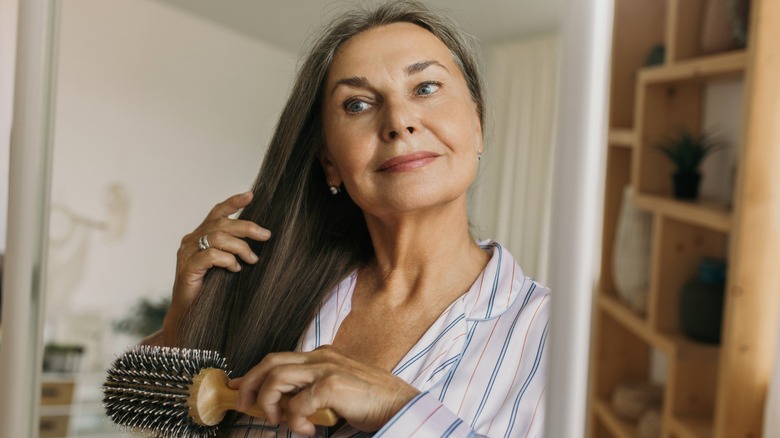
There's nothing wrong with embracing long hair as we age (Jennifer Lopez's hair transformation proves that), but it's important to be honest about if the style is still right for you. "If your hair looks thinner, maybe it's time to try a shorter hairstyle," Penny James tells us exclusively. Long hair can emphasize a lack of thickness and volume as it can weigh your tresses down, and that can be particularly aging in your 40s and over.
Going for the chop in your fifth decade and further isn't all about aesthetics though. "Holding onto your long locks when they are thin and frayed may be making the hair damage worse," James tells us, as long hair can often appear wispy and dry at the ends. That's because hair that's already damaged (which older hair is particularly suspectable to) is more porous, so more at risk of further damage. Instead, adopting a short cut will remove the damaged ends for overall healthier looking hair. For the most flattering look, experiment with the best short haircuts for your face shape.
Not keeping your hair properly moisturized
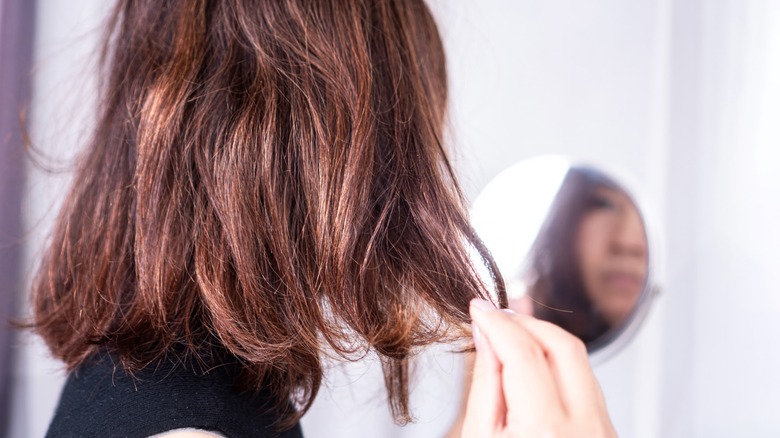
It's easy to hold on to haircare products and routines that have worked for us in the past, but how we treat our hair has to evolve as we age. For most people over 40, that will mean gravitating towards moisturizing products. "As hormone levels shift and sebum production decreases, hair in your 40s requires extra moisture," Penny James shares. And there are some easy ways to keep your locks moisturized.
First, stop over-washing. It's generally recommended that thin hair can safely be washed every other day, while more textured tresses (think tight curls or coarse hair) may be able to go two weeks between washes. Over-washing can remove the hair's natural oils that help keep it moisturized, which are more important than ever in your 40s and beyond. One of the best ways to keep moisture, or put moisture back, into the hair is to use moisturizing haircare products. Try Pantene's Daily Moisture Renewal Shampoo and Conditioner Set or the L'Oreal Paris Elvive Hyaluron Plump Shampoo and Conditioner Set. Moisturizing hair masks, such as the Pantene Miracle Rescue Hair Mask or Dove Hair Intensive Repair 10in1 Serum Mask for Damaged Hair, can also help keep your mane hydrated.
Not dialing back on heat tools
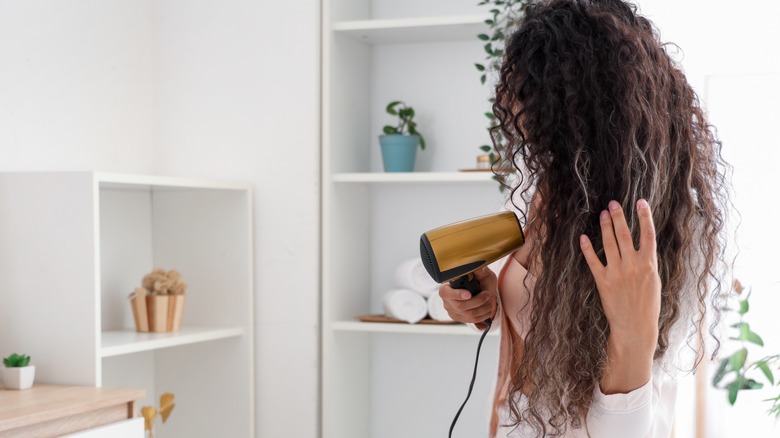
Because the hair becomes more fragile as we age, Penny James exclusively recommends cutting back on heat tools in your 40s and over. That may mean turning down the temperature or cutting back on how often, or how long, you use them. Hair stylers that use heat are notorious for creating damage and can often get much hotter than is ideal for your locks. But how hot is too hot for your hair tools? Dr. Tim Moore, GHD's chief technology officer, told StyleCaster 365 degrees Fahrenheit is an ideal temperature for most hair types. If you can go lower than that, do it! Or try our heatless curl hacks to really keep the damage at bay. If you have to use heat tools though, always ensure you're applying heat protectant properly first and using a product suitable for more mature hair's needs. Olaplex's No. 9 Bond Protector is designed to nourish your tresses as well as protect it, while TRESemmé Styling Spray was made to help reduce breakage.
It's important to remember it's not just heat tools that can cause hair damage. The sun can also be a culprit, as it can affect the hair's structure and cuticles which become more vulnerable as we age. James tells us it's important to wear a hat in sunnier climes, not just to protect your skin from dangerous UV rays, but your hair as well.
Forgetting to take care of your hair from the inside out
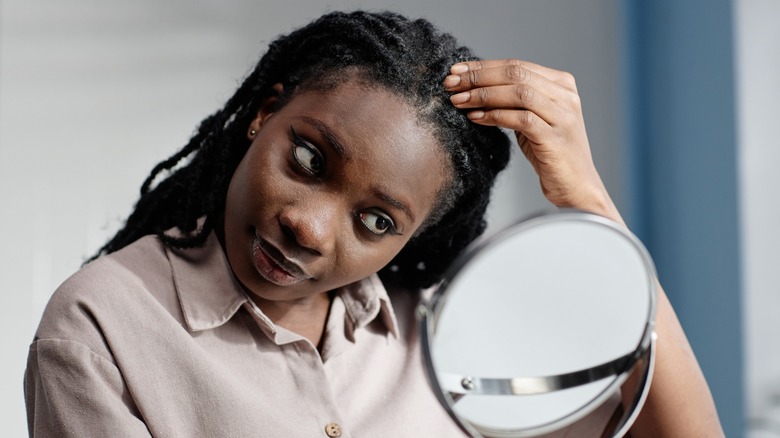
Taking care of your hair doesn't just come down to how you treat it from the outside. Healthy hair over 40 can also be aided from the inside. "Take care of your well-being. Think brain, gut, hair. Reduce stress, eat healthy foods rich in omega-3s, and be kind to your hair," Penny James recommends exclusively. Though more research is required to know the true extent, a 2015 study suggested omega-3 (which can also be found in the likes of fish and nuts) could help aid hair thickness and prevent hair loss, while Mayo Clinic notes links have been established between stress and hair loss. Speaking to BBC Food, registered dietitian and BDA spokesperson Clare Thornton-Wood recommended a balanced diet packed with vitamin C, Biotin (vitamin B7), protein, and zinc, which can all contribute to healthier hair.
Your 40s and older is also a great time to invest in supplements too. Nature's Bounty Biotin Hair Skin and Nails Vitamins are designed to keep the hair (and nails) healthy, as is Maryruth's Liquid Multivitamin. Always check with your nutritionist or doctor before introducing supplements into your life though, especially if you're on any medications or a specific diet.
Refusing to go gray
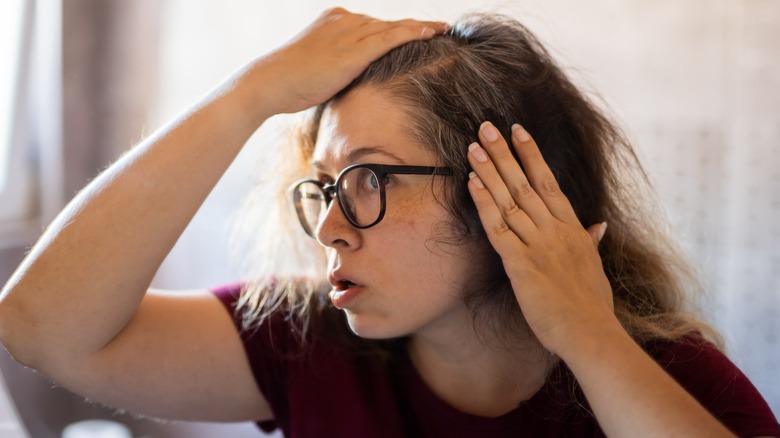
All too often, women over 40 refuse to embrace their grays, even though it may be what's best for their hair. There are multiple benefits to ditching dyes and letting your grays show through. Not only will it save you time and money on coloring and root touch ups (which means more time to focus on work and/or family), it can help keep your locks in good shape. Many permanent and semi-permanent hair dyes affect the hair's proteins, making your tresses thinner, weaker, and more suspectable to breakage. And that's seriously bad news considering your hair already becomes more vulnerable as part of the natural aging process.
Not only can avoiding hair dyes in your 40s keep your locks healthier, it can also be a smart move aesthetically. Some hair colors are less flattering as we age, particularly very dark hues. Dying your hair too dark can dull the color in the face and look too harsh, accidentally adding years to your appearance when gray would be more complimentary and natural looking.
Equally, though there are several tips for rocking your gray hair with confidence, many women 40 and over find embracing their grays provides a major natural confidence boost. There are multiple celebs who have proudly embraced their natural gray hair that prove that. And they've co-signed that it's an outdated notion to assume gray hair is instantly aging.