

Millennial Wedding Dress Trends That Boomers Will Never Understand
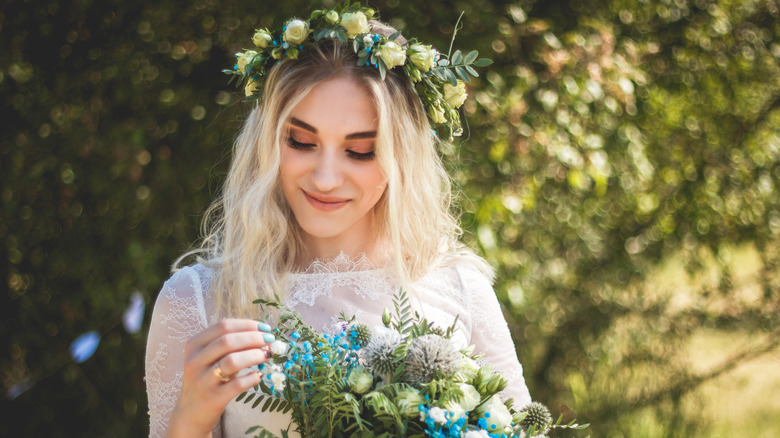
Millennial brides have been doing things their own way, much to the amazement and surprise of their baby boomer predecessors. And this unique approach was particularly evident in wedding dress choices in the 2010s. Since millennials are the generation born between 1981 and 1996, the biggest wave of millennial brides was around the early 2010s. Conversely, the baby boomers, who were born between 1946 and 1964, were getting married from the mid-1960s to the mid-1980s, and did things differently. Taking a look at wedding dresses from the '60s to the early '80s, it's clear that boomer wedding dresses featured high necklines, vintage lace, and empire waistlines. But wedding traditions change, and some cringey wedding traditions are totally outdated, as are some wedding dresses from earlier decades.
Millennial brides took things in a different direction, and their preferred wedding dress styles reflected this shift. There was the hipster bride with her sleek, simple gown for those who wanted an edgier scene. Or the boho-chic bride, with her whimsical gown that channeled a little bit more of a rustic feel, who probably got married in a barn surrounded by mason jars and other bucolic touches. For the more glamorous bride, the ballgown wedding dress of the 2010s scratched that princess itch. Even unconventional dresses worn by TV brides around this era show how millennial brides were doing things differently. From princess dresses to boho gowns, millennial brides broke away from boomer trends and blazed their own trail.
Millennials were crazy about princess wedding gowns
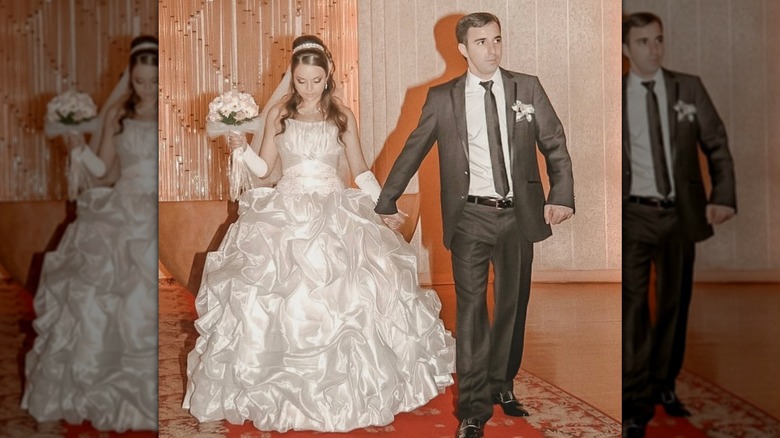
One of the most popular wedding dress trends of the 2010s was the princess gown. The wedding dress style, defined by its full-volume ball gown skirt of tulle and organza, usually featured either a strapless top or sleeveless bodice, directing most of the attention to the dress's skirt. Don't forget that Kate Middleton, with her 2011 wedding, was literally a princess bride, and the cultural phenomenon around brides at this time was historically shaped by her monumental wedding to William, Prince of Wales.
This wedding dress trend was also influenced by the Disney princess mania, with brides selecting gowns that fit a Cinderella vibe. Folks may recall the hugely popular Alfred Angelo Disney Princess line from 2011, which featured voluminous, sparkly wedding dresses inspired by Sleeping Beauty, Snow White, and Princess Jasmine. Wedding dresses of this proclivity often featured decorative belts and sashes around the waist, and often were bedazzled with sequins and sparkles. It was the ultimate girly wedding dress for the millennial bride.
Millennials loved boho bridal themes
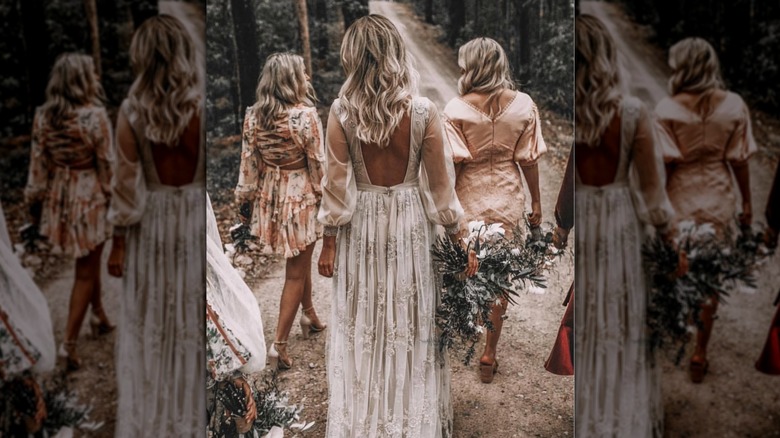
One of the most popular millennial bridal trends was the boho dress. Often more subdued and featuring lace and slim-fitting silhouettes, the wedding dress wasn't meant to overpower the visual impact of the day like generations prior. Instead, the spirit of the wedding prioritized individualism (which, in hindsight, is less impactful considering how ubiquitous the trend was at the time) and a free-spirited vibe. The popularity of festival-wear from Coachella heavily influenced these particular wedding dresses, and makeup was both minimal and natural.
Some brides even omitted veils in favor of flower crowns, and a perfect example of this craze is portrayed in Season 5, Episode 1 of the HBO series "Girls". In the first episode, called "Wedding Day", which first aired in 2016 — boho's heyday — we see Marnie Michaels getting ready for her wedding, as the quintessential boho bride. Marnie's dress had long, bell sleeves and an overall sleek, slim silhouette. She wore her hair in a loose braid and finished it off with a flower crown as well as a sparkly statement belt, channeling the popular rustic-chic vibe of the time.
Bridal bouquets were often curated from wild flowers and verdant greenery, loosely arranged to appear as though they were gathered on the way to the ceremony after walking through a meadow. These relaxed weddings also helped the wedding couple curate a wedding party aesthetic that felt unique to them and their loved ones.
The drop-waist mermaid wedding gown was another favorite of millennial brides
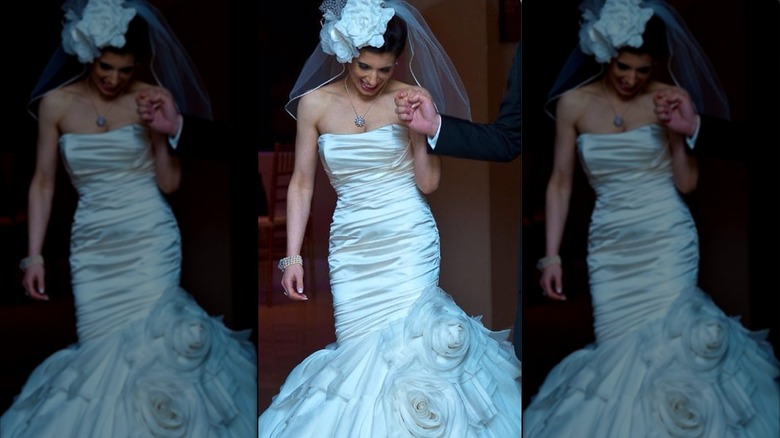
Merging the princess wedding gown with a more simplified silhouette, millennial brides gravitated toward the drop-waist mermaid gown. Bridal design house Maggie Sottero looked back at the dreamiest wedding dresses from 2000-2010, concluding that this design was one of their most popular gowns from the era. The dress was typically strapless with delicate ruching along the body, staying form-fitting until bursting into voluminous folds around the knee. It was common to have added embellishments, be it 3D flowers, oversized rosettes, or crystal detailing.
While a little dated by contemporary bridal standards and far too sensational for boomer brides, the mermaid gown did actually have a lot going for it. It highlighted curves in a flattering way while also providing a good dose of drama thanks to the trumpet flare skirt. It managed to be both sleek and exaggerated at once, which is an impossible feat for most wedding dress styles. Since boomer brides grew up in post-war recessions, their dresses often reflected a love of excess. Their gowns were full, heavy, and lacey, and these brides often opted for long sleeves and high necklines. Conversely, the strapless mermaid gown loved by millennial brides was a departure from this ornate detailing. Brides wanted to show more skin and wear something more structurally simple than their boomer elders.
One-shoulder wedding dresses were huge for millennial brides
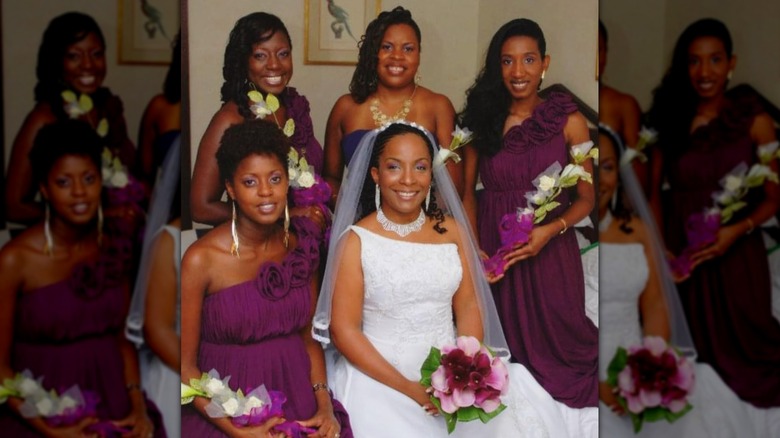
Millennial brides fell absolutely in love with one-shoulder gowns, which were a dramatic departure from the bridal tastes of the past. Since boomer brides preferred high-necklines and long sleeves, asymmetrical necklines offered a touch of romance and the unexpected, which is something every bride is after in her own, unique way. These one-shoulder gowns also offered a modern touch to a wedding dress, and felt more contemporary and fresh than gowns worn by older generations. Since boomer brides in the 1970s favored long sleeves, an asymmetrical neckline would have been hard to fathom. But for millennial brides, these particular dresses offered a type of sexy sophistication.
Strapless wedding gowns were one of the most popular trends in the 2000s, and bridal designers were trying to find unique ways to update their dresses for millennial clientele. So, around 2010, the one-shoulder gown entered the spotlight. The shoulder strap also added additional support in a way that completely strapless dresses didn't. These gowns often featured Grecian draping or delicate lace on the body to maintain that touch of romance so sought after on a wedding day.