

Everything You Need To Know About Applying Foundation To Older Skin
We may receive a commission on purchases made from links.
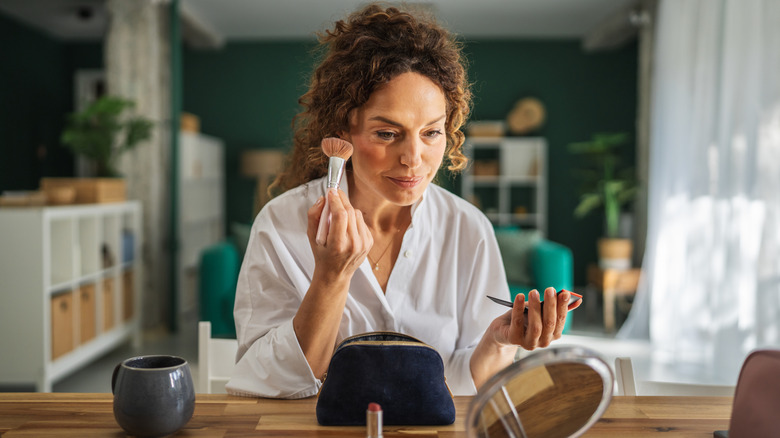
Beauty evolves over time, which means certain beauty routines should as well. "As we age, our skin naturally changes in texture, elasticity, and moisture levels, which means the foundation youʼve always used may begin to behave differently on your complexion over time," Ogle School Cosmetologist and Beauty Education specialist Stanley Nolan tells Women, exclusively. That means, your once-perfect routine will need updating as you get older — otherwise, it can turn into a makeup mistake that ages you. "Using a formula or application technique that no longer suits your skin can unintentionally highlight fine lines, dryness, or uneven texture," explained Nolan.
However, by updating your products and your application methods, you can count on your makeup to keep you radiant, even as you age. The right foundation can even skin tone and blur discoloration, while restoring a dewy glow. Get the best effects from your makeup by also adjusting your skincare routine to cater to mature skin. "I love a vitamin C serum — it really does brighten your skin, and I've found it simulates the look of youth," makeup artist Kay Montano told Vogue. "Then, you have lovely skin to start your make-up with."
Don't forget to prep
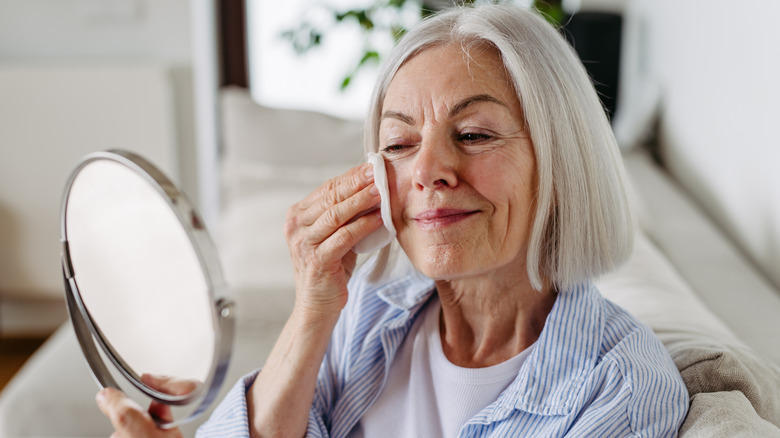
The most important step comes before you even start applying foundation. "Preparation makes all the difference!" explains beauty specialist Stanley Nolan. "Foundation tends to cling to dry patches without proper prep, leading to a dull or uneven finish." To avoid that, start with clean skin and then use a moisturizer suited to your skin type. "I love using a really rich moisturizer so the skin is gorgeous and glowy," makeup artist Fiona Stiles told Into the Gloss.
Next, apply a primer, ideally one formulated for mature skin, such as Elizabeth Mott Thank Me Later Blurring Face Primer, which will help keep the product from settling into any fine lines. Primer provides a smooth, texturally even surface and also helps your foundation last throughout the day. Give each product roughly a minute to settle into your skin before proceeding to the next step to keep makeup from sliding, separating, or streaking throughout the day.
Opt for light coverage
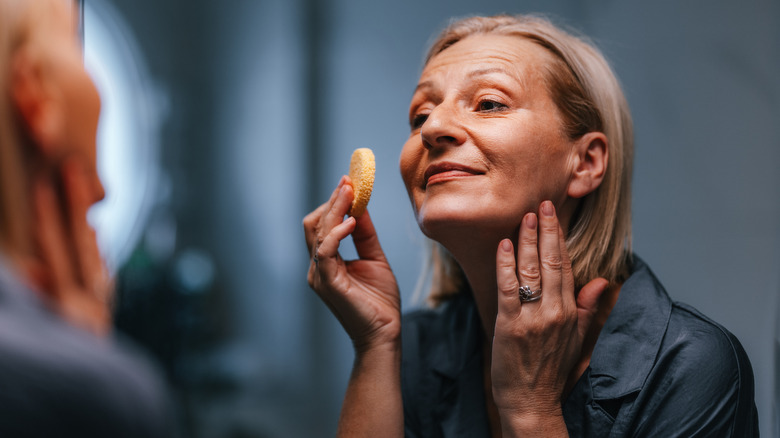
As your skin ages, it's best to shift toward lighter makeup application. "Applying too much product across the entire face instead of using lighter, targeted coverage can also create a thick or heavy look rather than a natural one," says beauty expert Stanley Nolan. "I always suggest applying less product than you think you need and building only where you want coverage."
You're also likely to have better, more natural results if you swap your full coverage formula for something lightweight and hydrating, like Saie Slip Tint. "I usually recommend lighter, skin-like formulas such as tinted moisturizers, serum foundations, or buildable medium coverage, since they enhance the complexion without settling into lines," says Nolan. Since mature skin can be dry, look for liquid or cream formulas. "Going for lightweight, hydrating, and luminous foundations is typically best to ensure a radiant, dewy finish as this gives the skin a youthful glow," makeup artist J Guerra told InStyle.
Use the right tools
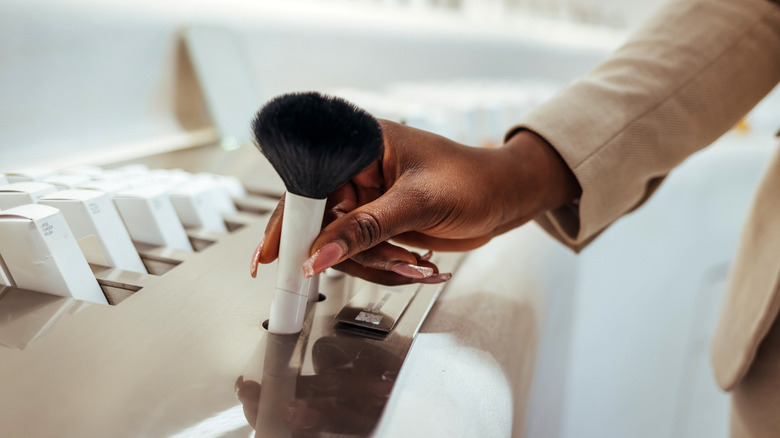
If you've taken the time to select a foundation formula in the perfect color, don't just casually swipe it on with your fingers. Instead, take as much care with your tools as with your product. Nolan recommends "gentle tapping motions" with a brush or sponge, like the Original Pink Beauty Blender, to precisely control placement. If you opt for a brush, look for something with a dome shape, like the e.l.f. Ultimate Blending Brush. "It buffs foundation into the skin beautifully using circular motions and allows for control and buildability," makeup artist Essie Cohen told Byrdie.
Using the right tools will help you avoid applying too much product, allow for more even coverage, and give you greater control when building your product. "Take a damp makeup sponge and press — don't drag — over the skin," makeup artist Christian Briceno explained to Glamour. "This pushes pigment into texture and lifts off extra product." By wetting and squeezing the sponge first, you'll prevent it from soaking up product meant for your skin.
Find the right shade
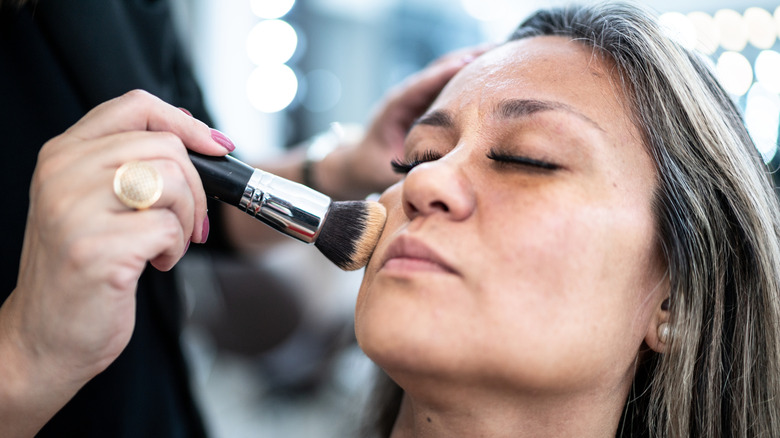
Nailing the perfect foundation shade becomes even more important with age. "The wrong shade or undertone can emphasize unevenness and cause the complexion to look flat instead of bright and lifted," shares beauty expert Stanley Nolan. Matching your skin tone can be tricky and require a lot of trial and error, so check for the signs you've found your perfect shade.
However, the right shade will add youthful luminosity while downplaying discoloration or dullness. "Choosing a shade with the right undertone and a soft, radiant finish can brighten the face and add back dimension, which tends to look more youthful than a flat matte look," says Nolan. Look for a color that's brightening and features a warm undertone. "Yellow warms up the skin. And the warmer your skin looks, the younger it looks," makeup artist Sandy Linter told Allure. "It just has to have a tint so that the skin tone is sunnier and doesn't go ashy." Finally, steer clear of matte finishes, which can emphasize dryness and dull your skin's glow. Instead, a satin or dewy finish, like Charlotte Tilbury Beautiful Skin Foundation, will do more to blur fine lines and provide a glow.