

Flats Through The Decades: How The Shoe Style & The Ways We Wear It Have Evolved
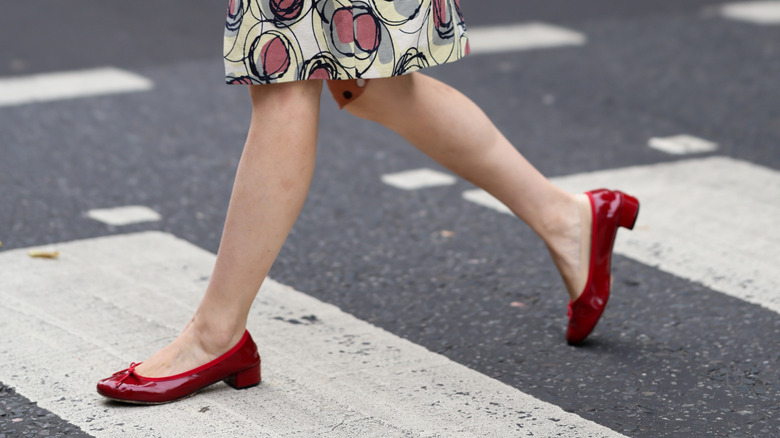
Ballet flats may be one of the fashion industry's hottest trends, but one thing is certain: the dainty silhouette is far from new — and this isn't the first time it's been in the spotlight. Flat shoes have been around for decades, centuries even. In recent years, designers have modernized the elegant flat, reimagining it with sheer fabrics and netted textures. While some Hollywood icons like Zoë Kravitz have re-embraced the simple shoes that were a huge hit in the 1990s, others have added a playful touch to their outfits by wearing a more modernized version of the shoe. Modern flat-shoe silhouettes include Mary Jane revivals, flat shoes with a buckle strap across the toes, and statement flats adorned with studs and crystals.
In an interview with InStyle, Sara Mahdavi, stylist and creator of Closet Fairy Styling, said modern designs have given fashion enthusiasts bolder options. "That contrast keeps the overall outfit feeling cool and balanced," Mahdavi shared, adding, "I actually think juxtaposition is what makes ballet flats and Mary Janes feel modern." Mahdavi also noted that pointed flats have become outdated. With some styles falling out of favor, you'd think the slip-on shape of a flat shoe would have been reimagined far too many times. But no, the trend has prevailed. In recent years, flat shoes have continued to evolve, leaning into balletcore-inspired silhouettes. The returning trend marks one of fashion's biggest full-circle moments. Let's take you back to the 1700s, when the story of the flat shoe began.
When ballet flats were actually used for dancing
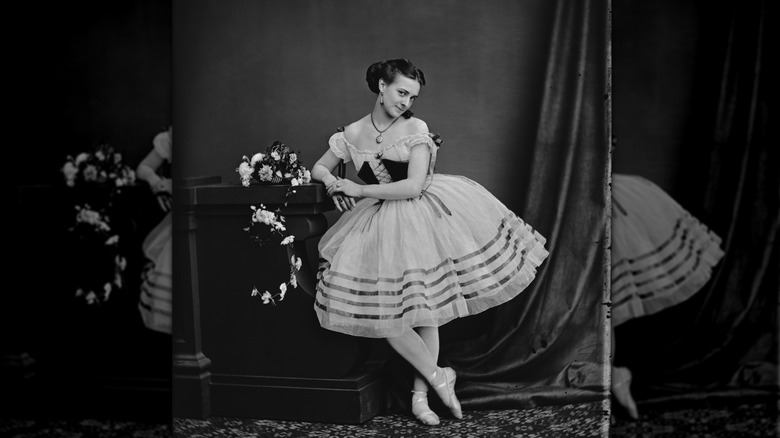
The fashion world can thank Marie Camargo for the relentless ballet flat trend. Until the 1700s, ballet was performed in heels. But in the late 1720s, Camargo became the first woman to replace her heels with a slipper-inspired flat shoe — pictured above on British actor Susannah Fowler in 1864. The simple silhouette was ideal for performing complicated choreography, and quickly became the go-to choice for ballerinas. Ballet flats became a widespread fad in the late 1880s, when renowned dance shoemaker Salvatore Capezio opened his very own store in New York City.
Ballet flats were embraced by 1950s it-girls
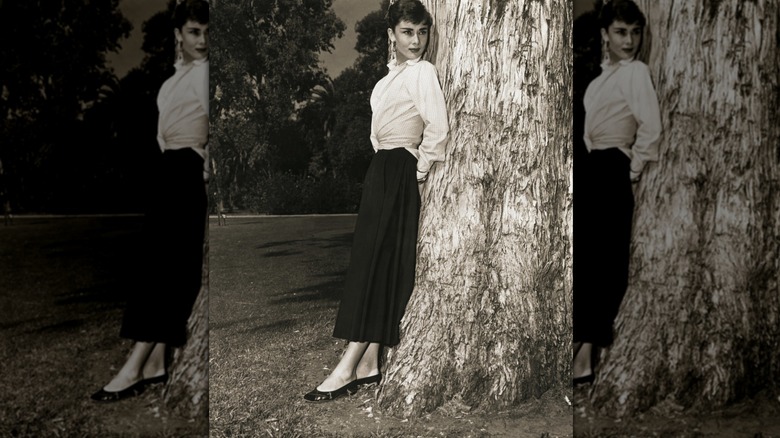
In the 1950s, the simple silhouette was reimagined as an off-stage shoe. The new design mimicked the slip-on shape of those worn by ballerinas — pictured above on Audrey Hepburn in 1950. The new trend marked a shift in women's fashion, with a larger emphasis on comfort. After Brigitte Bardot requested a flexible pair from designer Rose Repetto to wear in "And God Created Woman," flat shoes were embraced by the era's it-girls. It seems Bardot made flat shoes an international fad, and they made her an international fashion icon.
The mod aesthetic brought flats to life
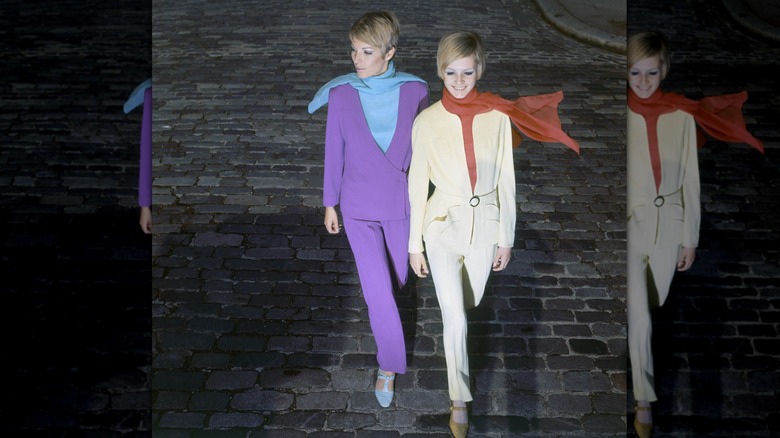
Cut to the 1960s, characterized by bold geometric prints and lively shift dresses, when flat shoes were redesigned to appeal to mod aesthetics. As the era's most influential icons helped popularize vibrant trends and pops of color, flats naturally became brighter — just look at model Twiggy in 1966. While some pairs were baby pink, lime green, or vibrant yellow, others featured statement adornments on the toe. In recent years, using flat shoes to add a pop of color has become one way to ace the ballet flats revival without making yourself look dated.
Gladiator flats became iconic
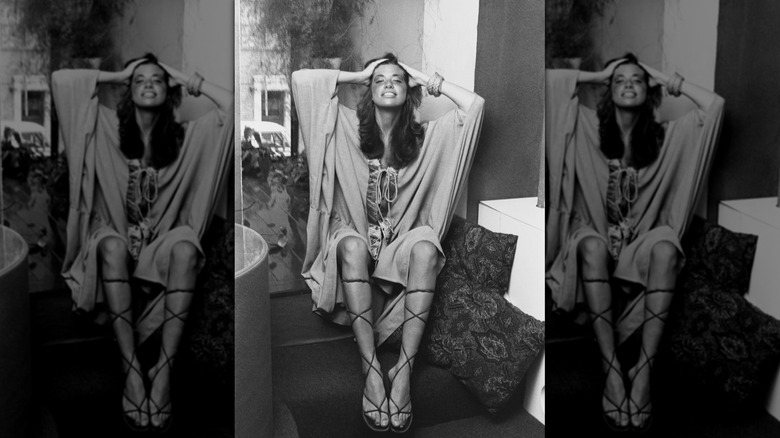
It's no surprise that flat shoes continued to be a major fad in the '70s, as it was an era defined by down-to-earth charm. However, the silhouette was adapted again. This time, gladiator flats took center stage, featuring an extremely flat sole and laces that crisscrossed up the calf and toward the knee. Bohemian and hippie-style trends meant fashion enthusiasts were leaning into nature-inspired clothing, and gladiator sandals provided a historic and natural finish. The style was featured in Vogue, and Pattie Boyd gave gladiator flats their iconic moment.
Working women made flats sophisticated and formal
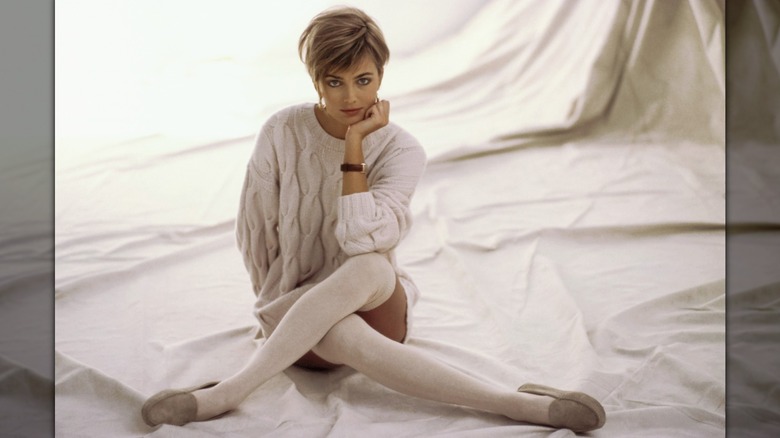
As more women joined the workforce in the 1980s, flat shoes took on a more tailored look. Rather than a ballet-inspired shape, flat shoes kept their slip-on silhouette but evolved into loafers. This new design was chunky, but provided a fashionable and sophisticated finish to women's uniforms — a far cry from the athletic ballet flats that were trending in 2024. These loafers were produced in dark and neutral shades, predominantly navy and black, and the formal design blended seamlessly with the power-suit fad, which also took off in the '80s.
Fashion enthusiasts had two very different flat-shoe options in the 1990s
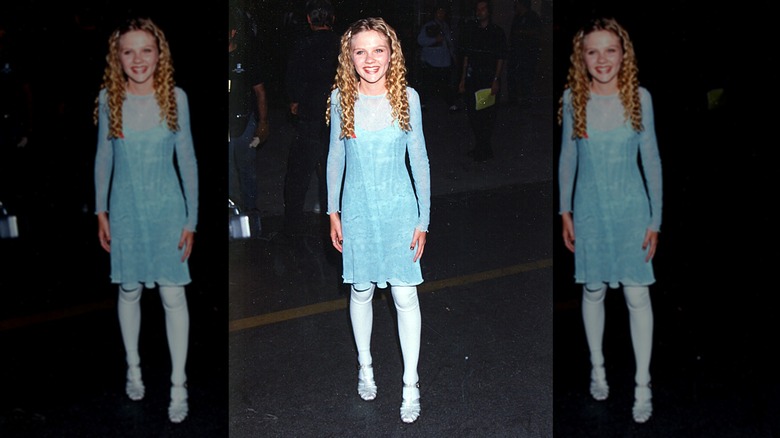
During the 1990s, flat shoes took on two very different forms. Supermodels like Kate Moss embraced a more nostalgic flat shoe silhouette, resembling a simple ballet shoe. But the decade's love for minimalism didn't stop flat shoes from also morphing into jelly shoes, pictured above on Kirsten Dunst in 1995. That's right, fashion enthusiasts also wore plastic jelly shoes with ankle straps. Despite becoming known as an "ugly" trend in recent years, jelly sandals made a huge mark on the '90s. In 2026, they even made a comeback.
A newfound love for business casual meant flats became less bold
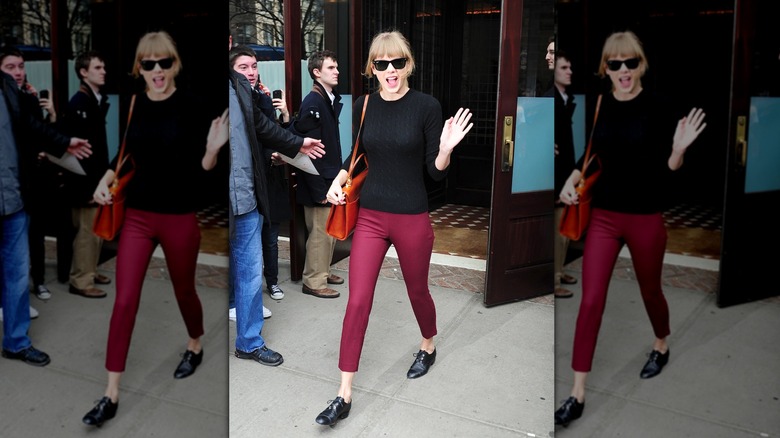
After briefly disappearing from the sartorial zeitgeist, flats were resurrected in the 2010s. As fashion embraced a newfound love for business casual styles, celebrities began pairing blazers, tights, and skinny jeans with formal flats. However, while it returned to its original slip-on, strapless silhouette, singer-songwriter Taylor Swift helped popularize the Oxford-style flat — pictured above in 2013. The new style gave outfits a flat, formal finish, similar to the 1980s loafer, but lacked the loafer's seamless slip-on shape and instead featured laces.
Flats actually look like ballet shoes again
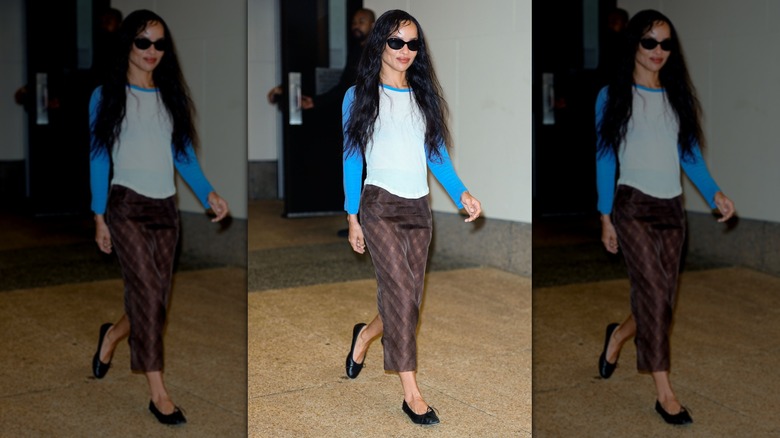
In recent years, flat shoes have taken some unique forms, but fashion has returned to the basic yet timeless ballet flat — pictured above on Zoë Kravitz in 2025. There may be another comfy shoe trend elevating your plain ballet flats, but the original dance-inspired shoe will prevail. In a 2026 Vogue article, Vogue Shopping's Alice Cary claimed that so-called sneakerinas and split-toe Tabis were no competition for the original ballet-flat design by Rose Repetto. "The appetite for Repetto's is evidence that there'll always be room for the original, enduring ballerina," she wrote.