

The Most Comfortable Types Of Heels For When You Want Height Without The Hurt
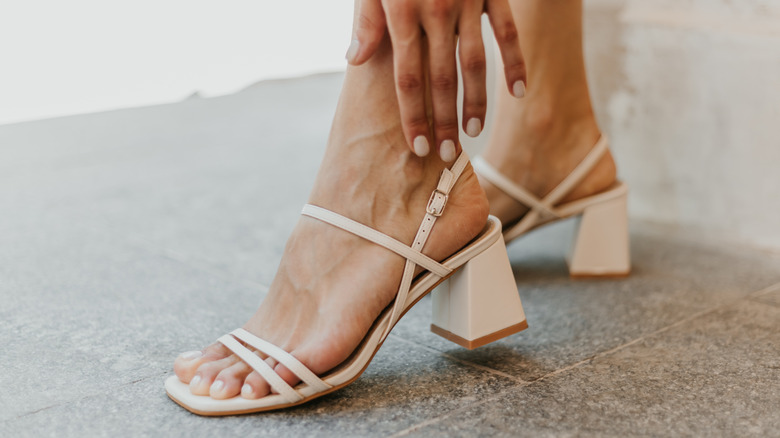
There is something undeniably satisfying about slipping on a pair of heels and instantly feeling a little taller, more polished, or more dressed up. The problem is that the higher the heel, the more likely it is to hurt your feet. Fortunately, you don't necessarily have to choose between wearing heels and being comfortable.
The key is being a little more strategic about the type of heel you choose. On top of the outdated heel trends to step away from in 2026, a wider heel can give you more stability than a stiletto, while a platform can provide extra height without creating quite as steep an angle between your heel and forefoot. Details such as an ankle strap, a roomier toe box, cushioning, and the shoe's overall construction can also make a significant difference.
Women spoke exclusively with Dr. Dana Figura, board-certified podiatrist and creator of FootDocDana, to learn which heel styles can provide some extra height without making your feet miserable. She says that, while there isn't one universally "safe" heel height, she recommends staying closer to one to two inches when possible, particularly when you'll be standing or walking for extended periods.
A block provides height and stability
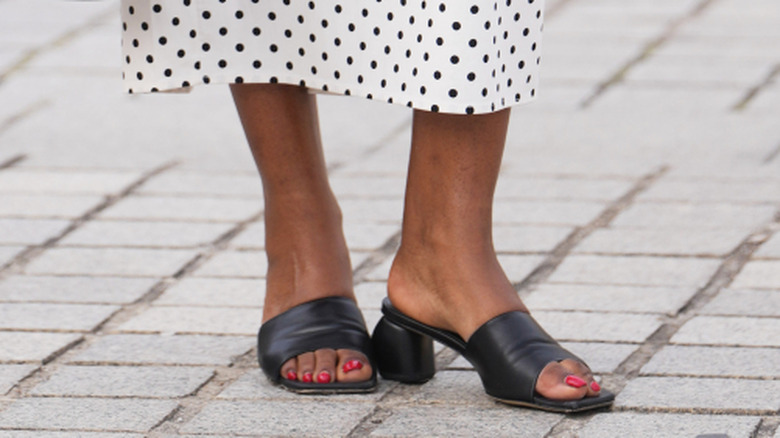
If you want a heel that doesn't feel like balancing on a pin, block heels are a great option. Unlike a stiletto, which concentrates your weight on a small point, block heels provide a wider, more stable base. That extra surface area can make walking and standing feel more secure, particularly if you're wearing the shoes for hours.
Dr. Figura says, "A block heel is usually a better option than a stiletto because it gives a wider base of support and is less likely to wobble." She also recommends considering how long you'll actually be wearing them, noting that once heel height exceeds two inches, many begin to notice more pressure through the forefoot. For comfort, Figura recommends staying closer to one to two inches, and real-life heel-wearers seem to agree. In a Reddit discussion about finding comfortable footwear for long-term wear on the r/findfashion subreddit, user @NotMyCircuits recommended, "Look for block heels. Lower height is better," while emphasizing the need for 'a solid platform so you are not constantly adjusting your weight & balance.'
Even fashion insiders embrace the style for practical reasons. Carolyn Bessette Kennedy loved block heels, and Sara Hankin described herself to Vogue as 'a big advocate of the grandma heel, or mid-height block heel,' adding that she also loved a good flatform. The takeaway is simple: if you want a little lift without committing to a stiletto, a block heel is a great place to begin.
Try a wedge when you want more height
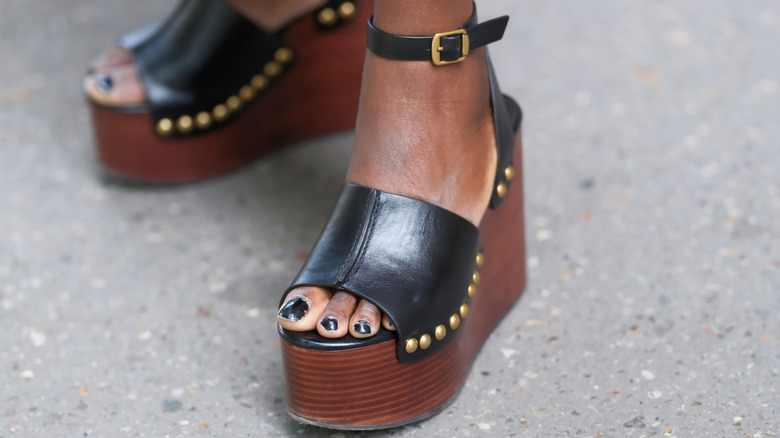
Wedges are another strong option when your priority is getting noticeable height while keeping your footing relatively stable. Instead of concentrating your weight on a narrow heel, a wedge distributes the sole more evenly across the length of the foot. That can make a significant difference if you find it hard to balance in traditional high heels.
Dr. Figura says, "Wedges can also be more comfortable because the height is distributed across more of the sole rather than concentrated under a tiny heel point." That doesn't mean every wedge will automatically be comfortable, however. The height, pitch, toe shape, fit, and amount of walking you'll be doing still matter, so a very high wedge can create many of the same problems as other high heels.
Wedges can also be an easier way to experiment with height if you're accustomed to flats. There's some real-world support for choosing wedges when comfort is the priority. In a community forum thread dedicated to finding the best place to buy comfortable heels on the r/WomenofIreland subreddit, user @AineGrainne specifically praised Esska shoes, explaining that they buy them for weddings and events because 'they're platform with block heels so comfy enough for dancing' all night. Over on the r/UKweddings subreddit, brides shared similar feedback in discussions about finding heels that are comfortable enough to wear for an entire wedding day, with Esska popping up once again.
A platform can make a high heel feel lower
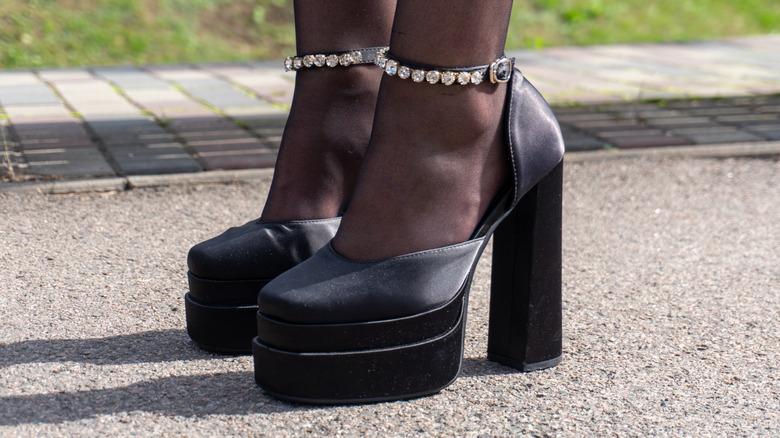
Here's where things get particularly useful for anyone who loves a dramatic heel. A platform underneath the ball of the foot can effectively reduce the angle your foot sits at, meaning a shoe that looks very high from the outside doesn't necessarily create the same pitch as a similarly high heel without a platform.
Dr. Figura explains it with a simple example: "A three-inch heel with a one-inch platform feels more like a two-inch pitch to the foot." That's why she considers platform heels another option for people who still want height, but are trying to make their shoes more wearable. In a forum discussion about managing physical footprint stress on the r/TwoXChromosomes subreddit, user @PlatformPriorities explained that their ultimate saving grace for long events and finding 'wearable' heels is choosing a style with built-in front bases, stating, "Anything platform with the heel is a little more comfortable" because it reduces the overall flexion angle of your arches.
That doesn't mean you should automatically choose the highest platform you can find; The overall construction still matters, and an extremely high shoe can still be difficult to walk in, even if the platform reduces the pitch. And don't assume platforms have to look chunky or overly casual. There are plenty of sleek platform sandals, pumps, boots, and evening shoes that will give you the visual impact of a much higher heel while creating a more manageable fit.
An ankle strap can stop your foot from sliding
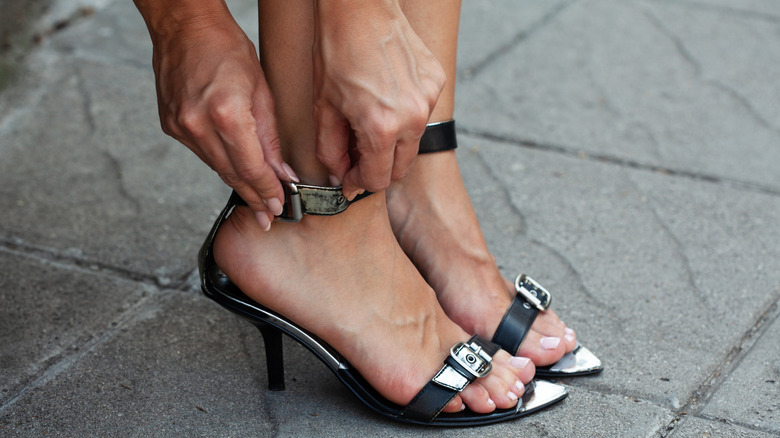
When choosing a comfortable shoe, the heel itself isn't the only thing to consider. If your foot constantly slides forward or your heel slips out of the back, your toes may start gripping the shoe to keep it in place. That can make an otherwise reasonable heel feel considerably more uncomfortable.
Ankle straps are one of the details Dr. Figura recommends looking for because, she explains, "They help keep the foot in place so the toes are not gripping or sliding forward." The idea is less about making a shoe look more secure and more about reducing unnecessary movement inside it. A well-fitting strap can also give you a greater sense of stability when you're walking.
Foot surgeon and shoe designer Marion Parke made a similar point when speaking with Vogue. Discussing her own designs, she said, "Many of my shoes feature straps," explaining that they help accommodate different feet because 'no two feet are the same.' When shopping, look for a strap that holds your foot securely without digging into the ankle. A sandal with a strap (like the Vionic Chardonnay Ankle Strap Sandals), a slingback with a secure strap, or a heeled boot can all provide this level of additional support.
Give your toes room with a round or almond toe
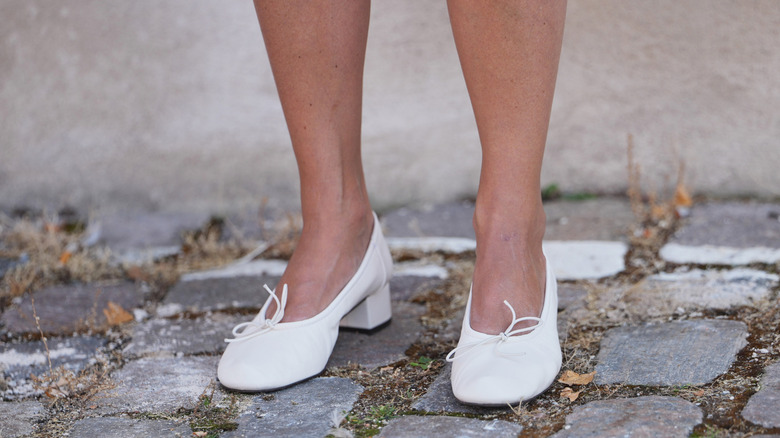
A beautiful pair of heels won't feel comfortable if your toes are squeezed into an impossibly narrow space. Pointed-toe shoes can create a particularly cramped environment because the narrowest section of the shoe may not correspond with the actual shape of your foot. If you love a pointed look, you don't necessarily have to give it up — you just need to find a shoe designed with your feet in mind.
Dr. Figura recommends 'a rounder or more almond-shaped toe box' over an extremely narrow pointed toe. She explains, "The toe box should not squeeze the toes together," and if you want the appearance of a pointed shoe, she suggests choosing one where the point extends beyond the toes rather than forcing them into the narrowest section of the shoe.
The importance of fit is echoed by foot professionals in Vogue's guide to shopping for heels, where Parke emphasizes, "No two feet are the same." This is particularly worth remembering when you're tempted to size down or tolerate uncomfortable pressure because you love a shoe's silhouette.
Break them in gradually — and don't ignore pain
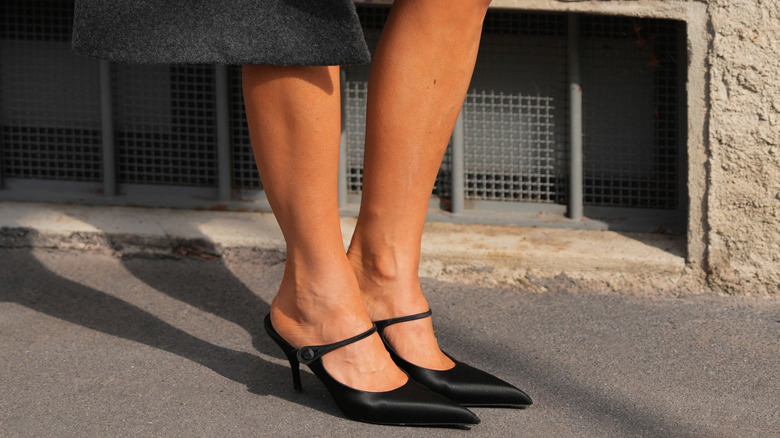
Even the most thoughtfully designed heel won't be comfortable if you wear it for the first time on the day of a six-hour event. Before committing to a new pair for a wedding, party, or long workday, wear them around your home in short spurts. This will give you an idea of what feels good and what doesn't.
Dr. Figura's advice is straightforward: "The biggest tip is not to wear brand-new heels for the first time to an important event." She recommends wearing them around the house for short periods, and paying attention to where they rub, pinch, or slide. Importantly, she adds that if they're painful right away, 'that is usually a sign they are not the right fit, not something that just needs to be broken in.'
To prevent blisters, Figura recommends blister-prevention balm, moleskin, gel pads, or adhesive bandages in areas that experience extra friction. She also suggests a thin cushioned insert or metatarsal pad for the ball of the foot, provided it doesn't make the shoe too tight. And if you'll be standing or walking for hours, bring a backup pair of comfortable shoes. This advice is supported by podiatrist Dr. David Schofield in Vogue, who recommends keeping more comfortable shoes with you when you know you'll be on your feet all day, switching into the heels when you actually need them.