

3 Books From 1973 That Are Still Relevant Today
We may receive a commission on purchases made from links.
There was something profound about the literary output in 1973. Historically, this makes sense. The world was in a richly generative time of shifting priorities and cultural upheaval. The early '70s moved on from the idealism that drove the 1960s, and the culture had become more cynical after major events like the Watergate scandal, which unfolded in the public eye from 1972 to 1974. The landmark Supreme Court case, Roe v. Wade, was decided on January 22, 1973. Gender equality had a new face in Billie Jean King, who defeated Bobby Riggs in an iconic tennis match on September 20, 1973, known as "Battle of the Sexes." Meanwhile, people gathered to protest the government in Wounded Knee, South Dakota in early 1973 over broken treaties.
The country was alive and changing, and such change also meant that literature was shifting. Many of the books that were published in 1973 capture this spirit of upheaval and transformation. Even poetry had a profound moment. For instance, Adrienne Rich's profoundly impactful book of poetry, "Diving into the Wreck," came out in 1973, and has remained iconic today. But it was the novels from the era that were both poignant and timeless. While there might have been a lot of turmoil at the time, 1973 was a great year for books, and these books still prove to be necessary reading today.
Sula by Toni Morrison is just as impactful today as it was in 1973
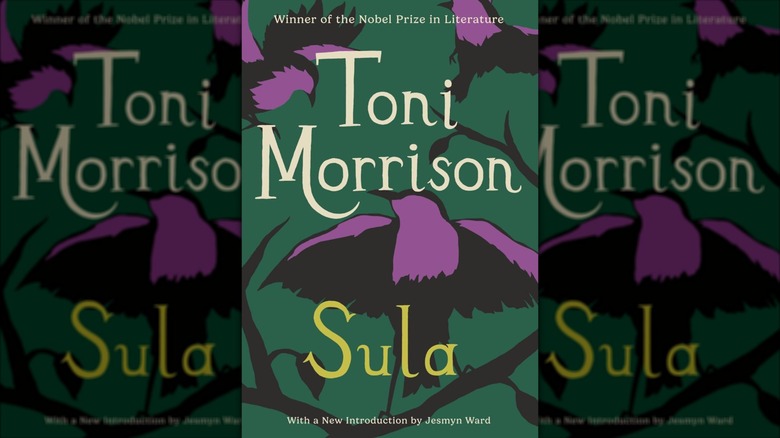
Toni Morrison's modern masterpiece "Sula" came out in 1973. The novel tells the story of two young girls, Sula and Nel, who grow up together in Bottom, a town in Ohio. It's a story about friendship, but it's also a story about what it means to be a lonely outlaw — someone who sits in the margins of accepted society. It's also a novel about race, sexuality, socio-economic displacement and forgiveness in the face of betrayal. With such universally important themes, it's no wonder that "Sula" is still an essential read over 50 years later.
Readers on Goodreads were profoundly moved by Morrison's novel. "'Sula' is a powerful, unforgettable compact novel, metaphorically symbolizing a woman who represents our need to find a scapegoat on those who are different," a fan wrote. "Morrison is just one of those authors that seems to understand certain aspects of life and human nature better than the rest of us," another commented, touching on its timeless appeal. "Toni Morrison ... creates characters who burn with an inextinguishable fire, and she does it through a series of carefully-written moments; ugly, heartbreaking scenes that somehow capture a person, a time, a place or an injustice in full," a third added. "Sula" is also a short read, so if you're after a quick read under 200 pages that packs a punch for your book club, it's a compelling choice.
Kurt Vonnegut's Breakfast of Champions is a treasure of 1973
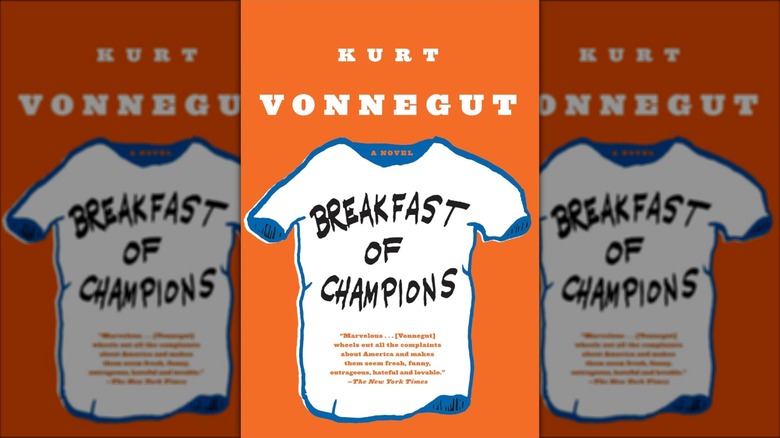
It's impossible to talk about literature from 1973 without highlighting Kurt Vonnegut's "Breakfast of Champions." The novel tells the story of writer Kilgore Trout, who has the unhappy discovery that a car salesman, Dwayne Hoover, thinks his fiction is the truth. Hoover's mind slowly starts to unravel throughout the novel, and Vonnegut deals with a mixed up world in clever and funny ways. While it was first published on July 12, 1973, Vonnegut's novel deals with everything from war, politics, racism, and even pollution in America — topics that are still urgent for modern readers.
Because of these themes, "Breakfast of Champions" still proves to be essential today. And Vonnegut handles those heavy topics deftly. "The plot offers Vonnegut the opportunity to launch in a bleak satire on race, politics, social standards, sexism, etc. I don't know how Vonnegut can be pessimistic and funny at the same time," a reader wrote on Goodreads. "What I most love about Mr Vonnegut, apart from his satirical humour, is the man's rebellious nature and his devil-may-care keenness to offend; but this went hand-in-glove with his resentment of social injustice and his wonderful humanity," another added. To shed light on social injustice and grapple with humanity shows that Vonnegut's novel still holds an important place for contemporary readers.
Cormac McCarthy's Child of God is not for the faint of heart
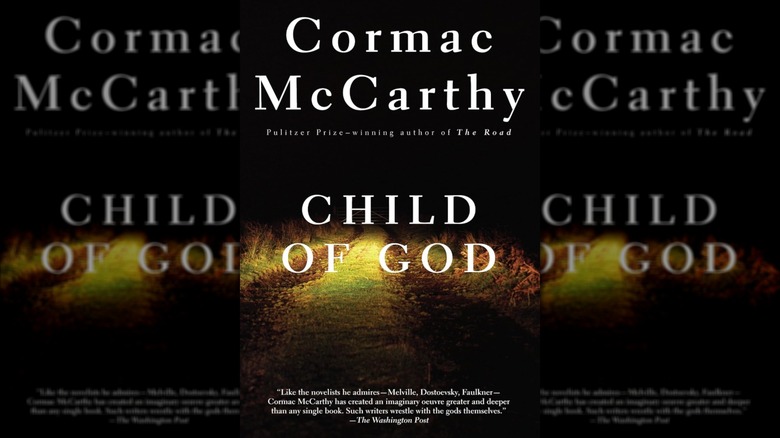
Cormac McCarthy's 1973 novel "Child of God" is not for the easily spooked. The dark, southern Gothic tale follows the character Lester Ballard, falsely accused of sexual assault and freed from prison with nowhere to go. McCarthy carves out the life of this social outcast in unflinching but strangely comical terms. The novel is unexpected and absolutely gruesome.
While McCarthy's novel was first published over 50 years ago, "Child of God" still attracts readers today because of its timeless examination of what it means to push someone so completely out of society that they become invisible to the larger social order. It's a story of loneliness, isolation, and self-reflection. Who has the right to judge another? These perennially human conundrums make McCarthy's novel timeless. Readers on Goodreads warned of the challenge of reading this novel, but the rewards are worth it. "Cormac McCarthy has a knack for capturing the depravity of humanity. His settings are familiar, but stripped back of romanticism, revealing harsh reality. The familiarity makes them feel more horrifying," one wrote. The point is that human nature is unchanging. If "Child of God" sounds compelling, then a list of the most disturbing thriller books, ranked by readers, might also prove interesting, as they scratch a similar itch.
Methodology

Every year has its own literary style and impact. 1973 proved to be so shaped by the cultural conflict and upheaval of the early 1970s that many of the novels published then have remained canonically important texts for contemporary readers. With this in mind, we curated this list based on three texts that were as impactful in 1973 as they are today. It's similar for other years. For instance, there are several books from 1985 that are still relevant today, that were equally shaped by cultural changes and continue to reflect unchanging portraits of human nature.
We curated this list based on the literary importance of the novel, but also on the literary importance of the author. Toni Morrison, Kurt Vonnegut, and Cormac McCarthy all proved to be masters of their craft, creating substantial bodies of work that both responded to and shaped culture. So if one of these books on the list strikes a chord, there are several more by the same author to choose from.