

The '70s Fashion Trends We Hope Never Come Back
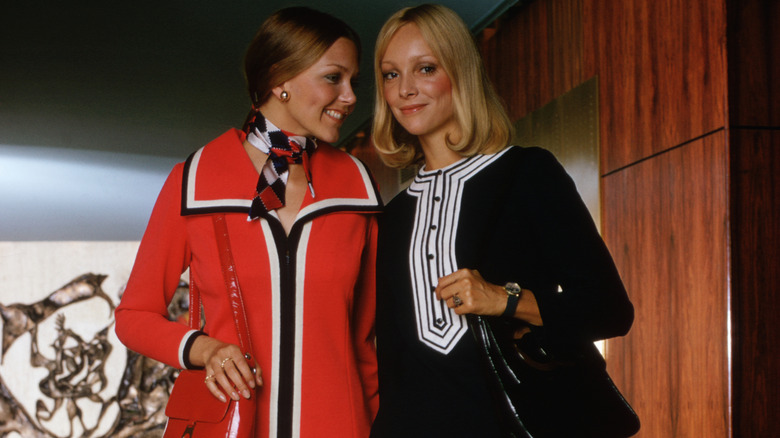
While no decade is perfect regarding its fashion trends, the 1970s really sets itself apart by having more unattractive, if not downright ugly, looks that need to never be worn again. Unless, of course, you're attending a '70s theme party and have no choice but to track down a powder blue polyester leisure suit. In fact, the 1970s were so all over the place that early on in the decade, Vogue declared, "There are no rules in the fashion game now," and looking back at photos and advertisements of that era, they were absolutely right.
"Fashion has become less important and more important at the same time," fashion designer Halston told The New York Times in December 1979, about the decade coming to a close. "It sort of tells you who that person is and where her head's at. You can choose to be anything you want — a visiting nurse, Bo Peep, a fortuneteller. Anything goes." After all, the 1970s will forever be remembered as "the decade that taste forgot."
Although for some people of a certain age, nostalgia may come with thinking back to some of the once-popular beauty trends of the 1970s, such as the orange and pea green bell-bottoms worn alongside bright blue eyeshadow, for those who weren't there, it's a different story. If anything, images of our parents and grandparents trying to make dagger collars look cool leave more questions than answers. That being said, here's hoping some of those '70s fashion trends never, ever come back again.
Dagger collars quickly ruined every look
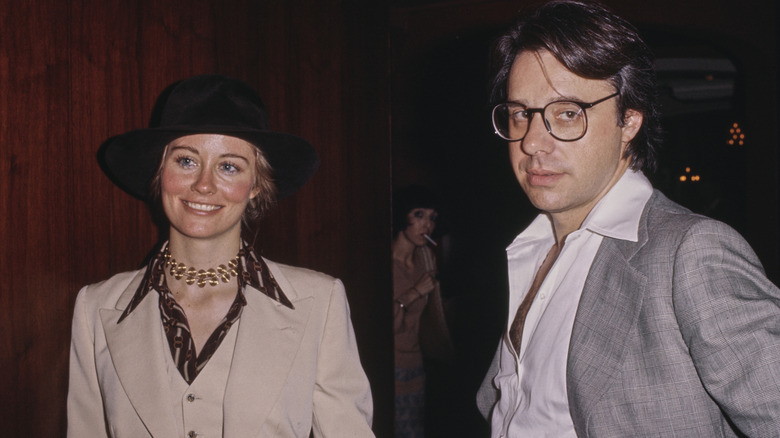
If ever there was a fashion trend that reeked of the 1970s, it's the dagger collar. Huge and over-exaggerated in both shape and size, and seemingly having no purpose other than to make an average shirt look like someone made a horrible mistake, the dagger collar was everywhere. Shirts, dresses, jackets — literally anyplace a collar could be stitched — is where you'd find these things in the 1970s.
But what's most interesting about the dagger collar, also known as the John Barrymore collar, as in the grandfather of '90s indie sleaze queen Drew Barrymore, is that even in its heyday, it was never flattering. "The choice of a dress shirt should be guided first and foremost by the appropriateness of its collar to the wearer's face, and not by the vicissitudes of fashion," menswear expert Alan Flusser told GQ in January 2025. Due to its shape, the dagger collar elongated already-long faces and made round faces look even rounder. However, a collar that's less exaggerated and has a medium point to it instead is more likely to flatter most face shapes. Despite this, everyone — literally everyone — was wearing these collars in the 1970s, because they were near-impossible to escape.
Eventually, someone must have realized that dagger collars weren't doing anyone any favors, because they disappeared from the sartorial zeitgeist. After all, if a collar is meant to frame your face, and it's not, no matter how trendy it might be, it simply won't have much of a shelf life.
Polyester and similar synthetic fabrics are bad on so many levels
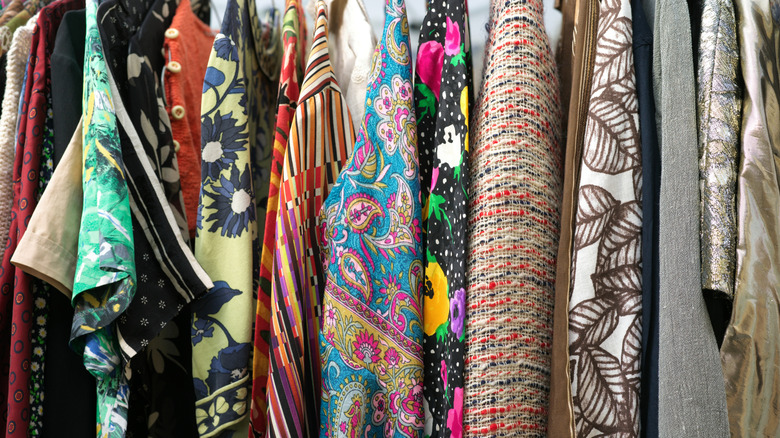
Although polyester was first invented in 1941 by British chemists, W.K. Birtwhistle and C.G. Ritchie, it wasn't until the 1970s that it really took off, and the world couldn't get enough of it. This had to do with the fact that polyester is cheap to make; therefore, any garments made from it are going to be extremely affordable. It also doesn't wrinkle, and unlike natural fabrics that might not last several seasons, if you purchase a polyester item, you'll have it pretty much for life.
However, when it comes to the environment, polyester is extremely harmful. For starters, it's made from petroleum, which isn't a renewable resource, meaning it sits in landfills for decades — it can take up to 200 years to decompose. Even before you buy it and it ends up in a landfill, its production requires an excessive amount of water and energy, and releases greenhouse gas emissions. Polyester also doesn't breathe, not only making it a fabric you should avoid in the summer, but one that can cause skin irritations, like dermatitis and allergic reactions.
While much of this information had yet to be discovered in the 1970s, now that we know the truth, we can make better decisions for ourselves. That includes transforming your wardrobe to embrace the slow fashion movement by ditching polyester and similar fabrics for good. And, of course, hoping that a polyester revival will never happen.
Excessively wide pant hems that seemed to go on for days
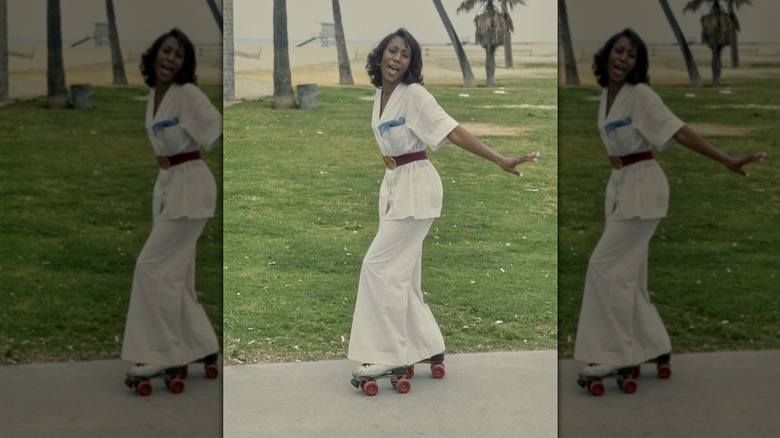
Although a bootcut jean or even a classic flared pant can be styled for any occasion, in the 1970s — as they did with everything — they got really carried away with hems. Not only were pants, for both women and men, wide all the way down the leg, but the hems were, for lack of a better word, huge. According to RetroWaste, it wasn't uncommon for a woman to have pants with a 32-inch wide leg hem, if you're measuring around — that's just four inches short of three feet. In fact, pants got so wide that the only way to backtrack the trend in a natural progression was to ultimately take things in the direction of bell-bottoms.
We hope this 1970s fashion trend never comes back because the design wasn't very flattering. For starters, although the major flare and wide hem are meant to elongate the leg, if you're on the shorter side, the last thing such a wide leg is going to do is make you look like you have height on your side. Which means, you'd have to find a really high heel, or as they wore in the 1970s, a platform shoe or boot. These pants also don't do any favors for the waist, hiding it instead of accentuating it. You also need to pay special attention to what you wear on top, because if you wear a shirt or sweater that's also baggy, you'll look like your clothes are trying to swallow you whole.
Real fur was — sadly — all the rage
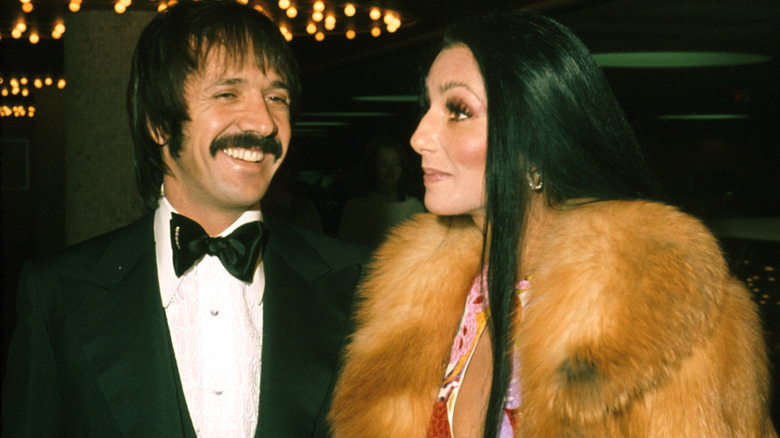
Fur is something that comes and goes regarding fashion trends. For example, in winter 2023, fur accessories were on the rise — both faux and real — and now the look has appeared to peter out again. But in the 1970s, real fur was everywhere. While there's no denying that fur will keep you warm should you find yourself in a tundra, in the '70s, it was more about proving that you could afford the real stuff.
After WWII, the US saw an economic boom that allowed for the middle class to not only come into existence, but grow in size, peaking in the early 1970s. With that growth, luxury goods, like real fur, became accessible to more people, so naturally, those who had the money, splurged on fur. After all, if you can't be one of the celebrities showing up to Studio 54 decked out in a full-length mink coat, you can at least dress the part. It was around this time that fashion designers also got in on the action, creating fur accessories and fur-trimmed coats and jackets, a move that elevated fur even more so, making it something that anyone who was anyone had to have.
Leisure suits should've never seen the light of day
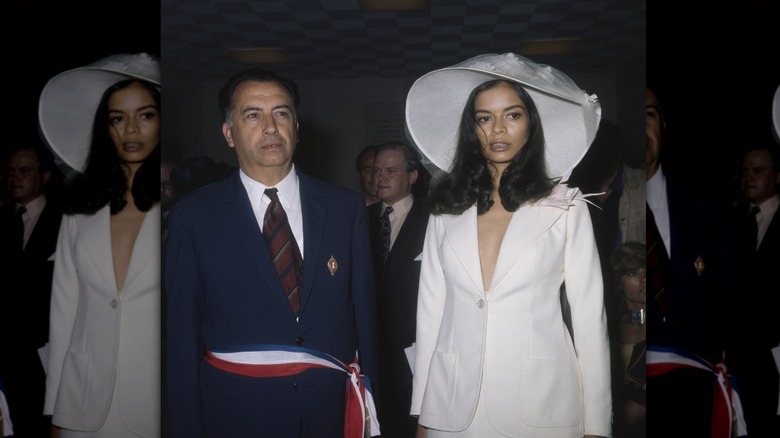
If you thought leisure suits were only something men wore in the '70s, think again. Both women and men wore leisure suits, and they were considered at the time to be the height of fashion — no joke. Usually made of polyester or other synthetic materials, leisure suits for women were basically an early take on the pantsuit of today that fashion icons like Kate Middleton have easily made into a sleek fashion statement.
While some leisure suits stuck to the solid, garish colors of the decade, others really went all in, embracing the loud patterns of the 1970s. Although no one is quite sure who invented this look, a quick walk down memory lane shows its evolution and how brands, like Lee, pushed the leisure suit in advertisements by declaring it "fit for a king." Not long afterward, French designers, notably Yves Saint Laurent, jumped on the bandwagon, making the leisure suit a must-have for people of means.
Since introducing Le Smoking in 1966, the first tuxedo for women, YSL had been testing society's expectations for women's attire. "A woman wearing a suit is anything but masculine," Saint Laurent said of his design, via Harper's Bazaar. "A strict, clean cut accentuates her femininity, her seductiveness, her ambiguity." So with the popularity of leisure suits taking off in the 1970s, YSL tapped into the trend. Saint Laurent even put Bianca Jagger in a leisure suit for her 1971 wedding to Mick Jagger. As stunning as Bianca looked, we never need to see another leisure suit out in the wild again.