

What Hollywood Hairstyles Looked Like The Year You Were Born
It's no secret that Hollywood hairstyles are ever-changing, but some significant looks have made a profound mark on each decade. Depending on the when you were born, you may have grown up seeing voluminous blowouts in television shows or watched music videos dominated by funky zig-zag partings. As with fashion, the prominent celeb hairstyles of each era also played a significant role in shaping the aesthetic of the decade.
Wartime hairstyles in the '40s were characterized by a profound focus on victory and women predominantly used heatless techniques to style their hair. In the '50s, a new era of Hollywood glamour transformed the leading ladies in film into hair icons. The '60s were a time of change, when women took on more androgynous appearances and significantly shorter hairstyles returned. The hippie and disco-inspired aesthetic of the '70s popularized hairstyles that looked more natural and unbrushed. Of course, hairstyles in the '80s followed the decade's larger-than-life attitude to fashion and voluminous 'dos were all the rage. The minimalist aesthetic of the '90s favored more refined hairstyles. By the 2000s, celebrities replaced their "less-is-more" mantra with statement accessories and bold hair colors.
While some hairstyles have certainly fallen out of favor in fashion and others have evolved into Old Hollywood hairstyles that are perfect for older women, there are many striking hairdos that remain wearable today. In recent years, several stars have done just that, proving that some of these iconic hairstyles have always belonged on the red carpet.
Pin curls and victory rolls symbolized the wartime culture of the '40s
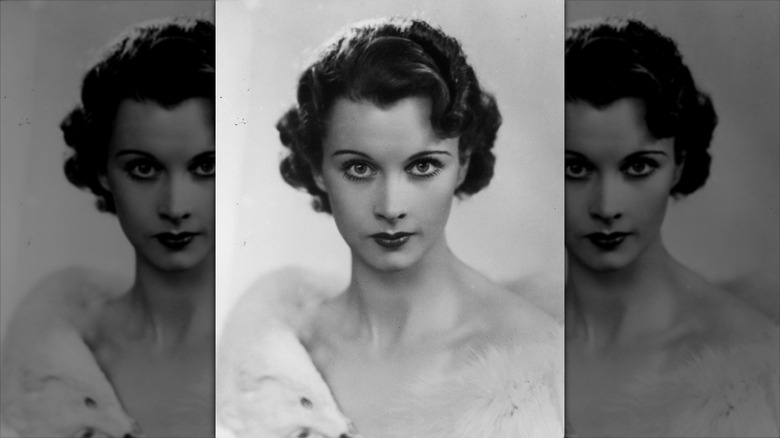
Hollywood legend Vivien Leigh was a hair icon in the '30s and '40s, and famously wearing her signature pin curls in her 1935 portrait. Leigh, alongside the likes of Rita Hayworth and Joan Crawford, popularized the style throughout the decades. Many stars favored the look because it could be created without heat, by wrapping the hair and securing with bobby pins. Victory rolls were also among the most popular hairstyles in the '40s, a style that featured V-shaped rolls at the front of the hairline, symbolizing a "V for victory."
Long bobs with side parts exuded glamour in the '50s
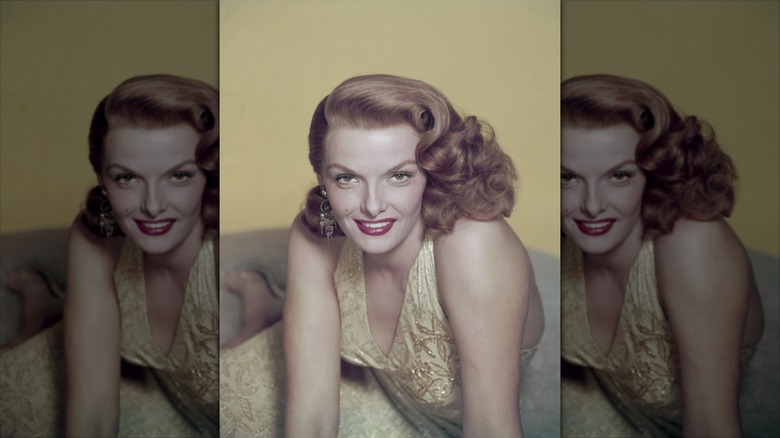
During the '50s, many Hollywood stars, like Jane Russell and Lauren Bacall adapted their long bob, or "lob," to accentuate different features. Russell's take on the look pulled her bouncy red ringlets over her shoulder with a sweeping side part that highlighted her heart-shaped face. Bacall, meanwhile, opted for looser curls and a less voluminous combover, which softened her angular cheekbones.
Beehives and androgynous-inspired pixie cuts challenged '60s norms
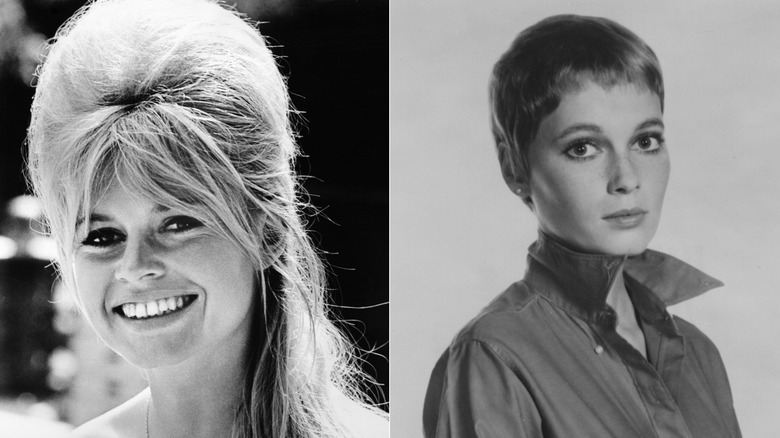
The '60s encouraged women to experiment with dramatic hairstyles. Early in the decade, Brigitte Bardot's signature beehive hairstyle, as depicted in her famous 1965 portrait, was everywhere. Featuring a teased bouffant that was rumored to be at least 15 centimeters above her head, the look lengthened the neck and drew attention to her eyes. Alongside the Bardot style beehive, a new mod culture inspired icons like Mia Farrow, to replace their glamorous hairstyles with androgynous pixie cuts instead.
Feathered haircuts appealed to the bohemian aesthetic of the '70s
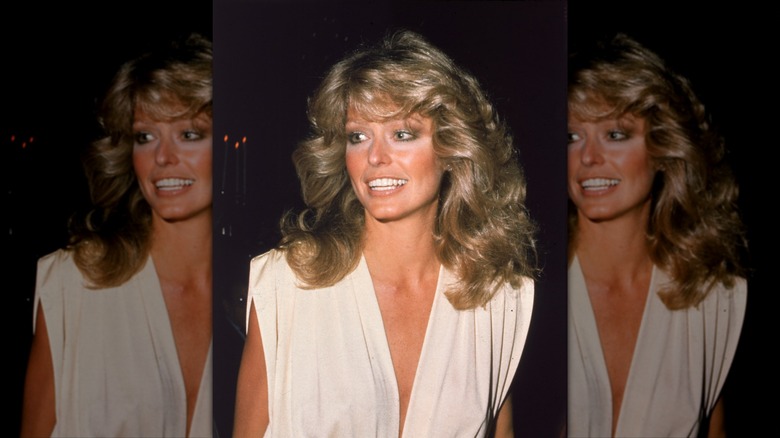
In the '70s, feathered hair was a major hit among Hollywood icons who embraced the era's bohemian-inspired style. The look featured several layers that were rolled outward in different directions to create dimension and add volume. Farrah Fawcett was especially associated with the hairstyle, wearing it on tv and at several appearances, like the 1977 Golden Globes. Fawcett also paired her feathered hairstyle with a fringe. Later, feathered fringes evolved into "Birkin bangs," one of the the most effortless fringe styles that was popularized by Jane Birkin.
Voluminous blowouts and untamed curls were big in the '80s
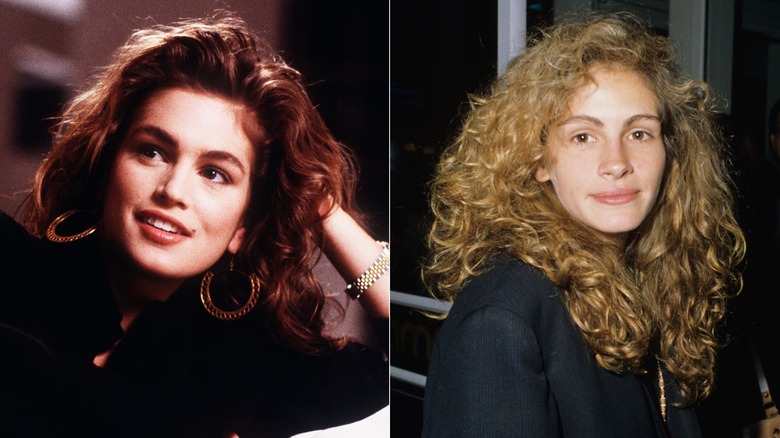
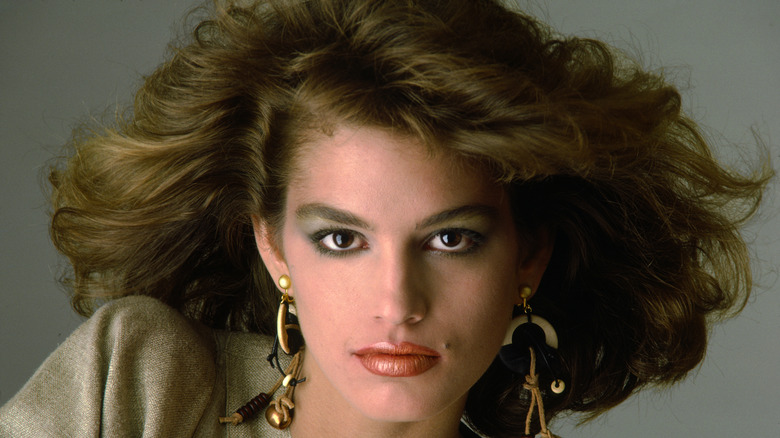
As models started to influence celebrity culture in the '80s, their signature styles also transformed hair trends. Synonymous with the decade's larger-than-life aesthetic, Cindy Crawford, pictured posing for a 1989 portrait, helped popularize the high volume blowout. While the look had an effortlessly undone quality to it, the model's deep side part and bouncy curls looked crafted to perfection. On the other end of the spectrum, Julia Roberts, meanwhile, brought a more relaxed approach to the style that same year, wearing her untamed spirals slightly teased on the red carpet.
Face-framing layers and pigtails reflected '90s media
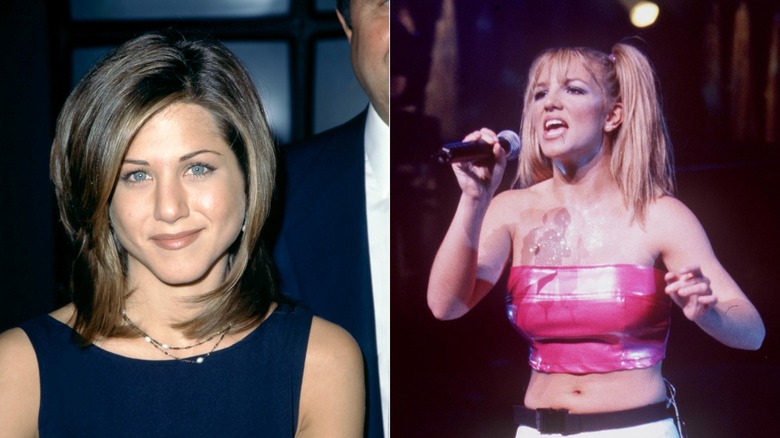
"Friends" influenced '90s beauty in more ways than one, but Jennifer Aniston's face-framing layers were one of the era's most prominent hairstyle trends. Nicknamed "The Rachel" after Aniston's character, pictured above in 1995, the shoulder-length look featured long tendrils that were angled inward to frame the face. While the subtle layers complemented the early part of the decade's minimalistic fashion, other looks, such as pigtails, (seen on Britney Spears) later brought a bold playfulness to Hollywood hair in the late-'90s. Spears' youthful bunchies evoked a playful feel and only enhanced her lively performances.
Two-toned highlights and crimped waves enhanced the playfulness of the 2000s
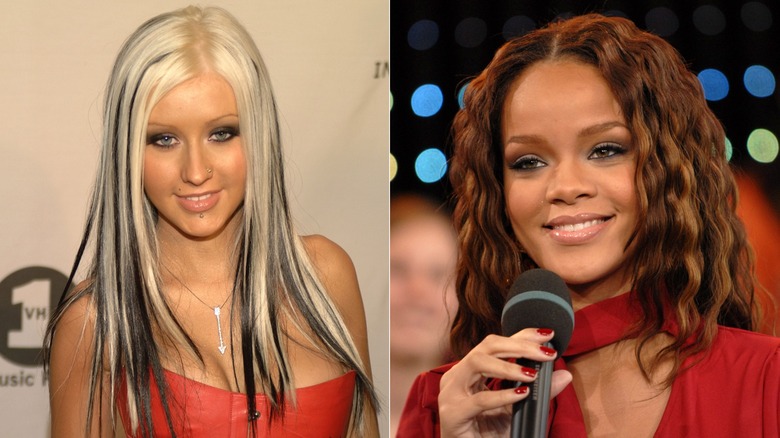
Hollywood fashion in the early-2000s was remarkably eclectic, and hairstyle trends followed suit. During a decade where "anything goes," two-toned highlights were also a major part of Christina Aguilera's stunning transformation. Aguilera, pictured above at the VH1 Big Awards in 2002 , became known for her blond-and-black highlights. By the mid-2000s, Rhianna helped popularize crimped waves – pictured at MTV Studios in 2006. Created using a crimping iron, this hairstyle mimicked the wave of a mermaid's hair — earning it the nickname "mermaid waves."