

Here's How To Read All The Little House On The Prairie Books In Order
We may receive a commission on purchases made from links.
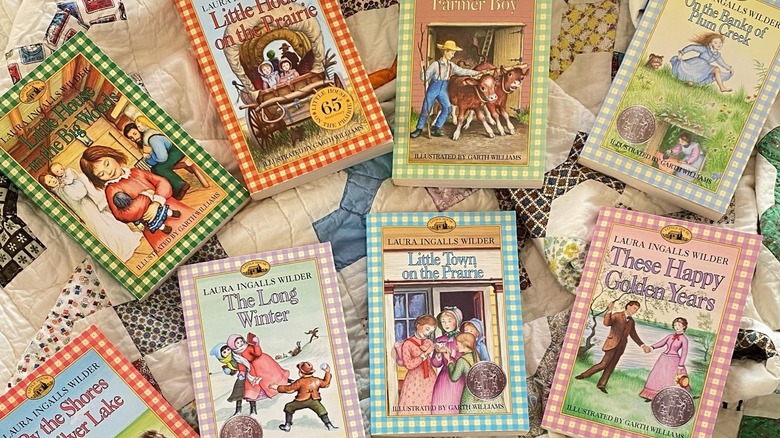
Search for Laura Ingalls Wilder's "Little House on the Prairie" books on Goodreads or Reddit, and you'll likely encounter readers encouraging you to read the classic children's books in order. However, that's easier said than done, as there's discourse online not only about what the correct order actually is but also over which books should be included in the main series. That's why we did some digging and put the novels widely considered to make up the main series in chronological order, which is slightly different to the order in which they were published, so you can read, or re-read, them in a way that makes the most sense and will give you the best reading experience.
But before we get into where to start with the main book series (which inspired the original TV show that ran from 1974 until 1983 and also became a classic book with a fresh on-screen adaptation released in 2026), you should know that there are more than just the following nine books available for your TBR list. Laura also published the "My First Little House Books" series of easier-to-read children's picture books that were adapted from the main novels. We didn't include those releases in our rundown, though, instead focusing on the core nine books that make up the original series. Another thing to take note of? The descriptions below contain major spoilers for the main series. So, if you're on your first read and only looking for a simple reading order, avoid reading too much into our descriptions to keep the series' overarching story a surprise.
1. Little House in the Big Woods
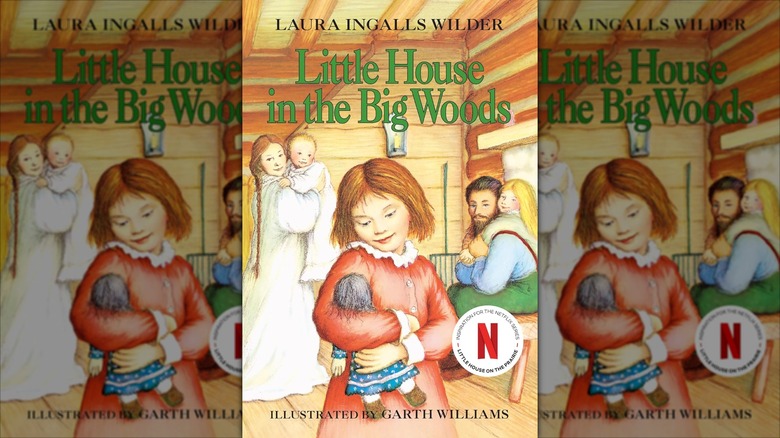
"Little House in the Big Woods" is the first book in the "Little House on the Prairie" series and the first in the "Little House on the Prairie" timeline. Though part historical fiction, the series is inspired by Laura Ingalls Wilder's real-life story and toes the line between fiction and nonfiction. This initial installment introduces us to the Ingalls family, including Laura and her sisters (Mary, Carrie, and Grace), parents (Charles Phillip Ingalls, aka Pa, and Caroline Lake Quiner Ingalls, aka Ma), and pet dog. The novel was first was released in 1932, but it's set in 1871, when the author was about 4 years old.
The Ingalls live in a log cabin in Wisconsin that doesn't offer many luxuries. They have to source all their food and need to gather wood to keep themselves warm as winter approaches. But as they all work hard to (literally) keep the fire inside burning, it's the warmth of the family that's at the heart of this scene-setting book.
One Goodreads reviewer praised the way Laura brought readers into her world for the first time, writing, "It had such great [descriptive] words, and I could imagine myself being there." Another shared how reading this book before the others allowed them to fully appreciate Laura's progression. "I realized how the books of the series grew in complexity as Laura herself grew. This first book, as all the rest, is written from Laura's perspective, and she was four, then turned five, in this book, so was a fairly easy read for me as a young child," they noted. Overall, this would be a good, even if simple, classic novel for your next book club read.
2. Little House on the Prairie
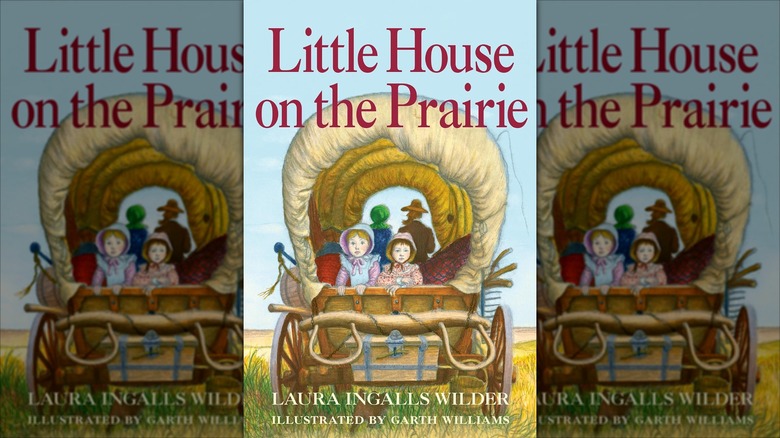
Though "Farmer Boy" was the second "Little House on the Prairie" book to be released, chronologically, "Little House on the Prairie" makes the most sense as the next book to pick up after "Little House in the Big Woods". Laura Ingalls Wilder is 6 years old in this book, which was published in 1935 and sees the family moving out of their Wisconsin cabin to Kansas, at Pa Ingalls' request. The concept for the entire series starts to blossom in in this book, as the family's life on the prairie truly begins and we get a glimpse at their lives moving around the country and living off of the land.
Pa builds his family a new home, and the girls and their parents start to get used to their new life. But things don't run perfectly smoothly, as a major conflict threatens to force them back on the road to settle in yet another new area. Though some Goodreads users noted that they read the book as a standalone and had no trouble understanding the story or context, others claimed it's more fulfilling when read as part of the wider collection since you'd be familiar with the Ingalls and their world. One reader even shared that this book didn't have as much humor as "Little House in the Big Woods," which may have mirrored Laura's perception about growing up and moving away from her home.
3. Farmer Boy
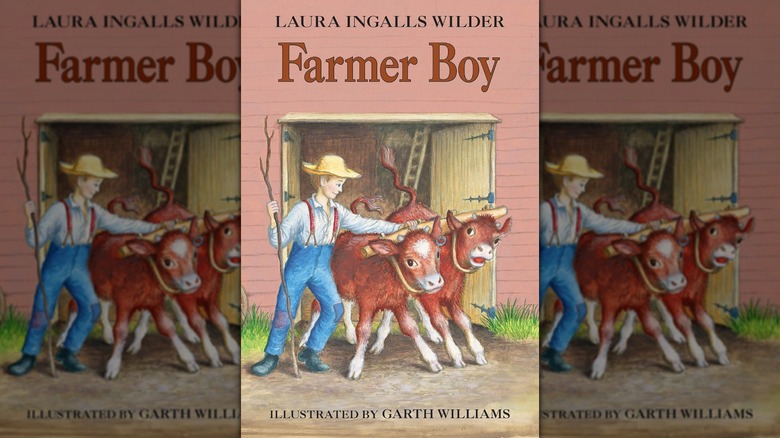
"Farmer Boy" follows "Little House on the Prairie" when read in chronological order. The book, released in 1933, is a little different to the others in the series, as it focuses on the upbringing of Almanzo Wilder, who would eventually become Laura Ingalls Wilder's husband. Almanzo lives in New York on his family's farm, and readers learn about his daily life, from chores to school. The little boy is desperate for his own horse but knows he needs to show his dad he can be trusted with such a major responsibility, so he takes it upon himself to prove he's capable of looking after animals.
One Goodreads user claimed this book offers more details than others, while another pointed out that the shift in characters and location give it a distinctly different tone to the rest of the series. However, a third noted that although it doesn't continue the Ingalls family's story, it still worked alongside the other books. "It functions as a kind of contrast in that it is a wealthier farm life experience in New England vs. the Midwestern farm life Laura lived, seemingly near starvation," they wrote, which gives further context for when Almanzo returns in "By the Shores of Silver Lake" before having a more prominent appearance in "The Long Winter."
It's worth nothing that not everyone considers this book to be part of the main "Little House on the Prairie" series. Some readers have claimed that it should be considered a standalone and separate from the other eight because it focuses on Almanzo and not the Ingalls family, like the other books in the series. However, outlets like Goodreads still consider the book part of the main series, so we encourage readers to include it in their reading order to get the full story.
4. On the Banks of Plum Creek
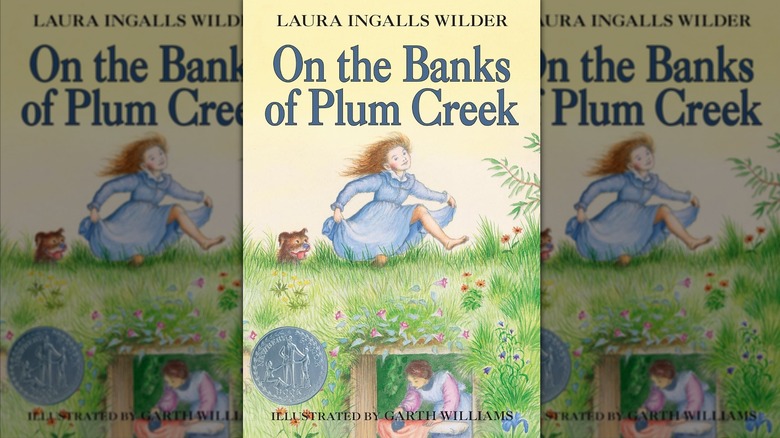
After the differing opinions on "Farmer Boy," things get a little simpler. Chronologically, the rest of the "Little House on the Prairie" book series follows the order in which each book was published. So, next on your TBR list should be "On the Banks of Plum Creek," which was published in 1937. In this installment, the Ingalls family are on the move again. After settling in Kansas in "Little House on the Prairie," this novel sees them uproot again and head to Plum Creek in Minnesota.
When they arrive, Pa's back on the mission to build his family another home. The kids, including a now-7-year-old Laura, try to pitch in and help where they can, which means learning how to fish and complete other household chores — all while grappling with a new life at school. But, of course, things don't run totally smoothly in this segment of Laura's story. The Ingalls find that their crops have been eaten by pests, and a serious blizzard is set to make things extra difficult.
On Goodreads, one user claimed this book was the most serious in the series. That may be because Laura, who is now several years older than in the first book, better understands the pressures on her family and the difficulties of rural life. However, others have argued that "On the Banks of Plum Creek" doesn't deviate too much from the series' style. In particular, the author still included several heartwarming family stories, which act as anchors in this world.
5. By the Shores of Silver Lake
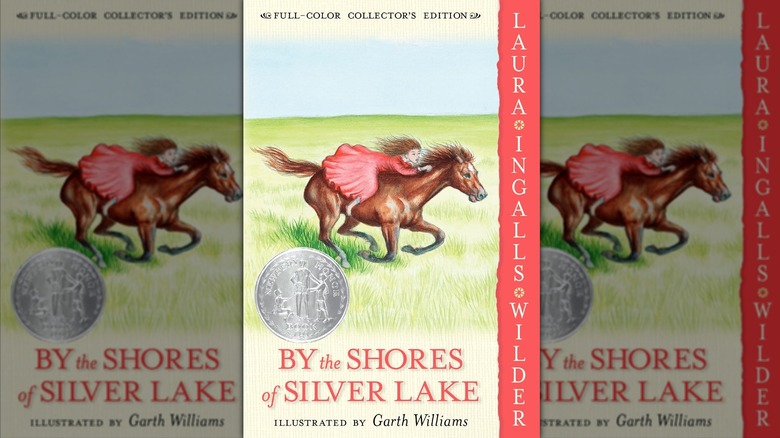
After reading "On the Banks of Plum Creek," pick up Laura Ingalls Wilder's 1939 book, "By the Shores of Silver Lake." The fifth installment carries on the pioneer family's story — and they're on the move again. After Pa lands a job on the rails in what would eventually be known as South Dakota, his family heads out to be with him. Laura, her mom, and her siblings then settle into their new home of Silver Lake, where Pa is determined to use his building talents to create a whole new town. After so much traveling across the nation, it seems that the Ingalls are finally more settled and ready to put down deeper roots in this installment.
Of course, "By the Shores of Silver Lake" also sees changes for Laura, who becomes a teenager. In fact, one Goodreads user pointed out that this book demonstrates a lot of literary growth for Laura. Not only has she gained a deeper understanding of her vocabulary, which comes with age, but she's also matured as a caregiver to her blind sister. "[She] inhabits a text that is intricately described and which gives a broader overview of events and situations," the user wrote. Others have pointed out how this book focuses a lot on what's happening in the vicinity of Silver Lake, which sets the scene for future books and demonstrates Laura becoming more aware of her surroundings.
6. The Long Winter
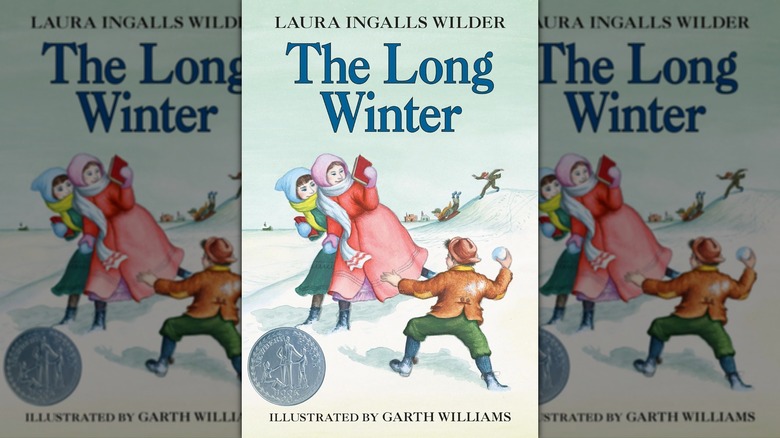
Published in 1940, book six in the "Little House on the Prairie" series is "The Long Winter." The book was released the year after "By the Shores of Silver Lake" and picks back up around the time that the previous book ends. As the title suggests, this book sees the Ingalls family grapple with an impending winter storm. The mercury plummets, and the weather turns incredibly dangerous, which means the Ingalls and their neighbors have to face the reality that it could be a while before they're able to safely venture out for food or get coal for their fires. In "The Long Winter," Almanzo Wilder is back as one of the main characters, which will pack more of a punch for those who read "Farmer Boy."
Overall, this book is one of the darker installments in the series, which potentially represents Laura growing older and realizing how difficult life on the prairie truly is. Outside of this, many readers over the years have appreciated Almanzo's perspective and growth in this book. "We also see more examples of Laura equating Almanzo with his Morgan horses," one Goodreads reviewer wrote, alluding to the romantic relationship Laura and Almanzo share in the later books. If family sagas like this are your thing, you should check out the Read with Jenna book club, which has chosen multiple similar books that will wet your whistle.
7. Little Town on the Prairie
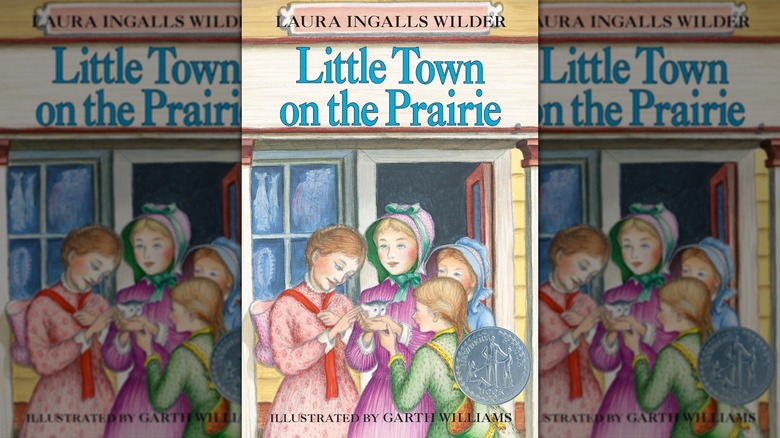
After "The Long Winter," read Laura Ingalls Wilder's 1941 release, "Little Town on the Prairie." This novel brings us back to the Ingalls family following the frigid winter that threatened their lives in the previous book. Thankfully, spring has finally arrived, which means Laura and her family are able to venture out of their home, analyze the effects of the devastating winter, and socialize with their fellow townspeople. And there's one person in particular with whom teenage Laura would like to fraternize: Almanzo Wilder. In this book, Laura fosters her young love while also working hard: She wants to employ her sewing skills to help her blind sister, Mary, get into a school that can meet her needs.
One Goodreads user noted that the religious tones and messages from the previous books had evolved in this novel, becoming more contemplative than strictly moralistic. Another brought up other fundamental changes in Laura, who's a few years into her teens in this release. "She was meaner, cared less about school, and just less mature," they claimed. Hey, that's just part of growing up!
8. These Happy Golden Years
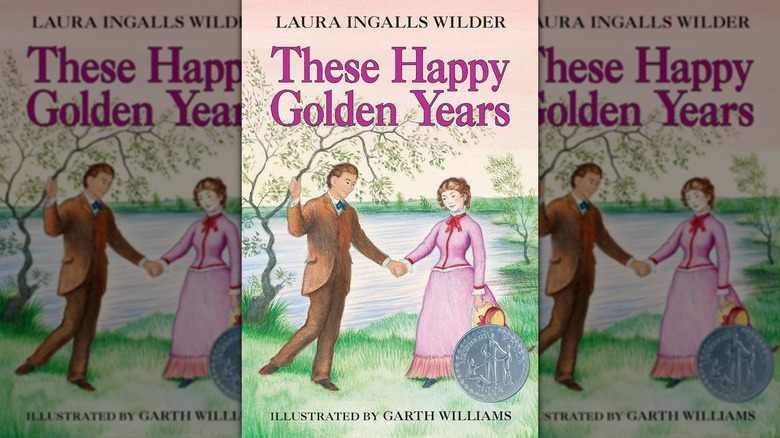
Published in 1943, "These Happy Golden Years" follows "Little Town on the Prairie" and sees a big change for Laura Ingalls Wilder as both the protagonist and author. She's still a teenager in this novel, but she leaves the safety of her family home in order to pay for Mary's school tuition. Laura gets a job over 10 miles away, but still, it's not all work on her mind. She's been spending more time with Almanzo Wilder, who is re-introduced to readers in the previous installments. While the two start off as close friends, it becomes clear that there's more than just a platonic admiration between the two youngsters.
The book serves as somewhat of a coming-of-age milestone in the "Little House on the Prairie" series, as Laura shows serious personal growth in her formative years. While the previous books focus on Laura as a child and the way she views the world under the protection of her family, she has a mind of her own here after gaining some independence. "This is Laura's truly first 'grown up' book. Though she's only 16 when it begins, she's 18 and married when it finishes," pointed out one Goodreads user. "I appreciate this book's quiet material, which is more about Laura's own personal growth into a young woman," wrote another.
9. The First Four Years
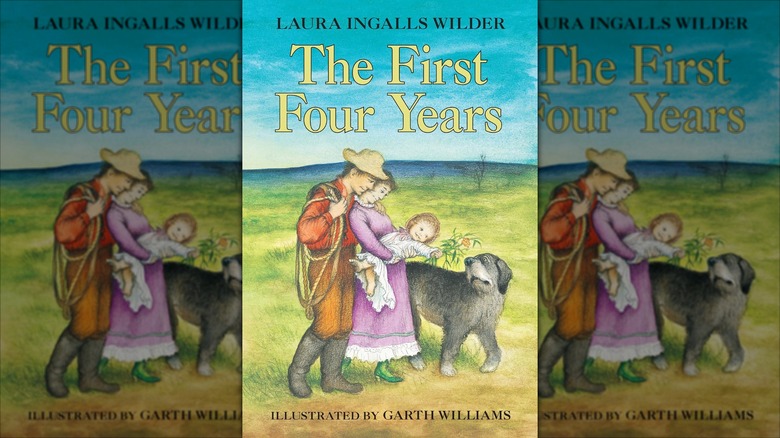
"The First Four Years" was published almost three decades after "These Happy Golden Years" — it was posthumously released in 1971 — and marks the final book in the series. In the final installment, Laura Ingalls Wilder has started a new life with her husband, Almanzo Wilder, and the two take care of a farm together and become parents to a little girl named Rose.
Many readers have commented on how this installment — a great book from the '70s that holds up to this day — has a different feel to the others, which were all released prior to Laura's death in 1957, and they don't all enjoy it. "The tone is different, harder, more grown-up, with many details that ended 'These Happy Golden Years' changed here, and not for the better," claimed one Goodreads user. "It's a different tone, an adult story, after the transition for Laura from pioneer girl to pioneer wife," wrote a second. Though the book is widely considered part of the core nine books, some readers have suggested not including "The First Four Years" in the main collection, taking issue with the manuscript being discovered after her death.
No matter your thoughts on "The First Four Years," when you've made your way through the book series, make time to catch up with the story on the small screen. If you treat yourself to watching, or re-watching, the original series, know the leading ladies of the "Little House on the Prairie" have had quite the stunning transformation since the show debuted in the '70s. If you're more into the Netflix series, we've also compared the original '70s "Little House on the Prairie" cast to the 2026 stars to see how the newer generation differs from the originals.