

The Most Popular Fashion Trends In The Decade You Were Born
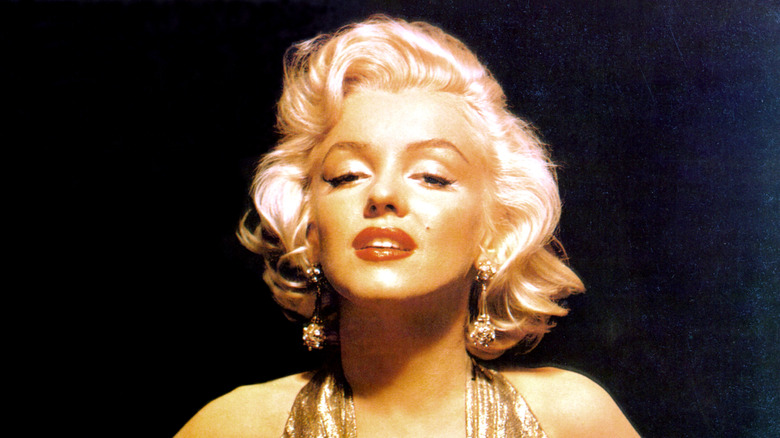
Looking back through history, it's clear that different fashion trends took hold of each decade. With the rise of the pin-up girl aesthetic, fashion in the 1950s was characterized by cinched-in waists and full-skirted dresses. In the 1960s, women redefined feminine beauty by popularizing androgynous haircuts, vibrant prints, and shift dresses. During the 1970s, trends moved toward hippie and bohemian styles.
While hair reached new heights in the 1980s, more women also joined the workforce, which meant fashion enthusiasts were also embracing big shoulder pads and pantsuits. All of that changed in the 1990s, when maximalism was out, and minimalism was in. The 2000s brought with them a powerful jumble sale of fashion trends — trends so powerful that the era has an entire aesthetic named for it. As of 2026, the "Y2K" aesthetic has, once again, become a mainstream trend.
While social media has not changed the way fashion enthusiasts follow trends, "it has certainly allowed certain trends to spread faster and farther than they would have otherwise," psychologist Pamela B. Rutledge told National Geographic. Rutledge also noted that following trends actually has more to do with our innate desire to fit in and less to do with materialism. Rutledge's point suggests that trends don't always have to make sense to garner attention, which may explain why the most popular trends of the decade you were born ended up defining an era for reasons that are hard to understand.
Button-down dresses from the 1950s meant women were always dressed to impress
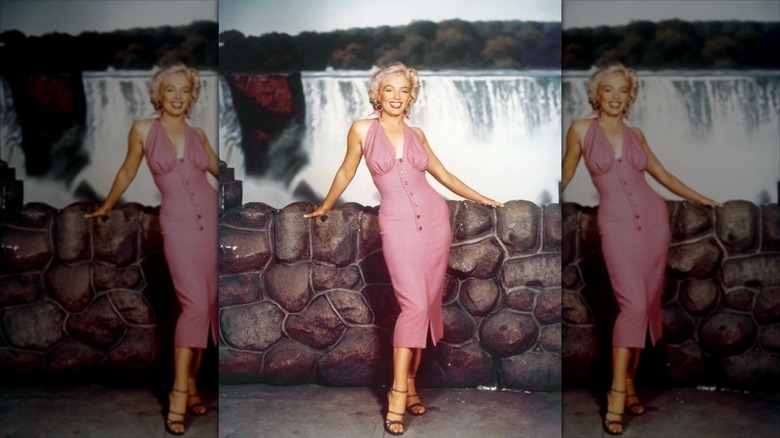
Button-down dresses are a boomer fashion trend from the 1950s that has proven their lasting power. The smart silhouette was particularly favored for its sophisticated appearance. "Women embraced femininity and dressed up for the most casual of occasions," personal stylist Andie Sobrato told InStyle. Shirt dresses allowed the era's pin-up girls like Marilyn Monroe, pictured above on the set of "Niagara" in 1952, to cinch their waists and showcase their figures. Since pencil skirts were also a major trend, the hemline of Monroe's dress also enhanced her stylish allure.
The miniskirt allowed mods in the 1960s to express themselves by showing some leg
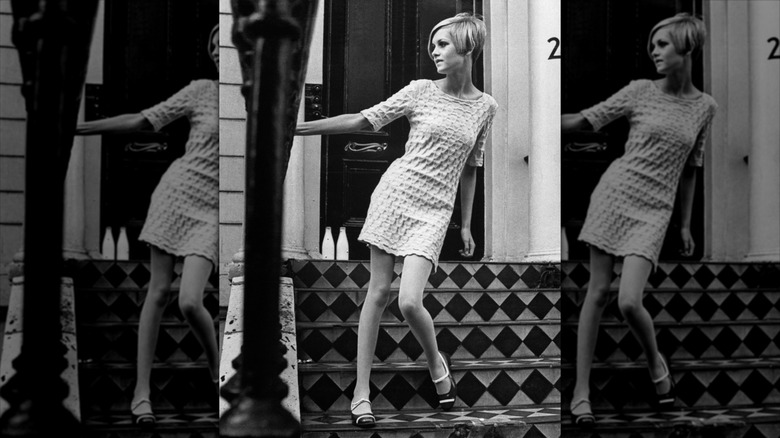
The 1960s brought with it a much shorter hemline. Enter the miniskirt. While there is some debate about who actually invented the miniskirt, it was so popular that designer Mary Quant was producing them on demand in 1965. The leggy trend was swiftly embraced by the era's biggest style icons, including model Twiggy, depicted above in a photoshoot in London in 1966. With her androgynous pixie cut and miniskirt, Twiggy's appearance perfectly captured the decade's mod subculture, which encouraged young people to rebel against societal expectations.
High-waisted flares and suede kept glamorous pop stars down to earth in the 1970s
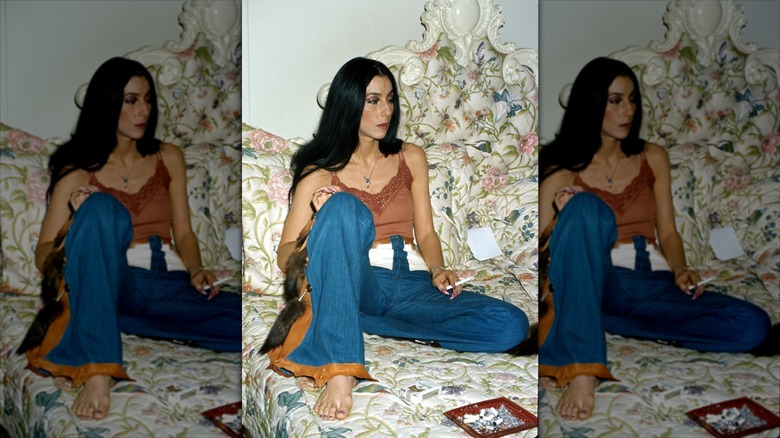
It's safe to say that the 1970s are remembered for their love of flared trousers that lasted the entire decade. Singer Cher even became a style icon for wearing bell-bottoms. Above, Cher is pictured posing for her 1977 portrait at home. She dons a trendy pair of flared jeans with cowhide and fur detailing. Natural fabrics like cowhide and suede are also among the popular fashion trends from the 1970s, favored for their earthy hues and for adding a down-to-earth touch to any outfit.
Power suits were so popular in the 1980s that they became a royal staple

As more women joined the workforce in the 1980s, office attire ultimately became more fashionable. Power suits were produced in vibrant colors and featured striking shoulder pads. The popular trend spread so far and wide that even Princess Diana became a fashion icon after she embraced the era's love for power dressing. Pictured above, she wears a red power suit for her tour of Italy in 1985. Her monochrome suit, featuring a pencil skirt and a longline blazer with statement shoulder pads, was designed by Jasper Conran.
The 1990s brought with it simple slip dresses and a newfound love of minimalism
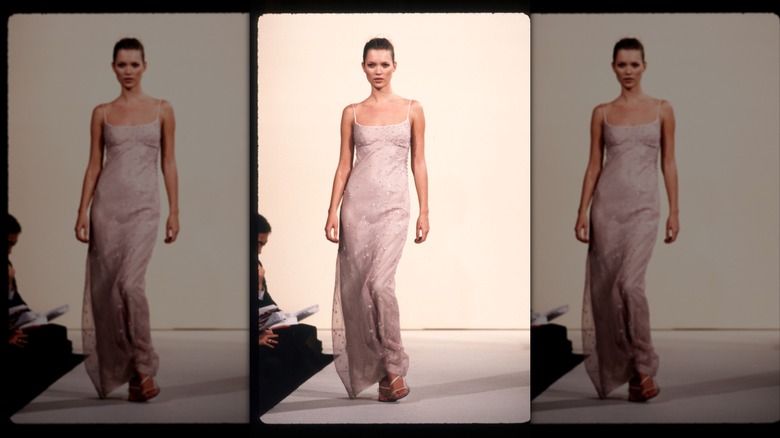
Fashion trends during the mid-1990s couldn't have been more different from the previous decade's larger-than-life attitude. Simple slip dresses became minimalist staples, and a muted color palette of black, white, brown, and navy replaced vibrant hues, and supermodels like Kate Moss became famous for their untouched appearances. In 1996, Moss walked the runway for Marc Jacobs wearing a blush slip dress that seamlessly captured the era's love for minimalism. Despite her lack of jewelry, Moss's dress featured delicate crystal embellishments that created an elegant allure.
The 2000s made velour tracksuits and oversized logos their own
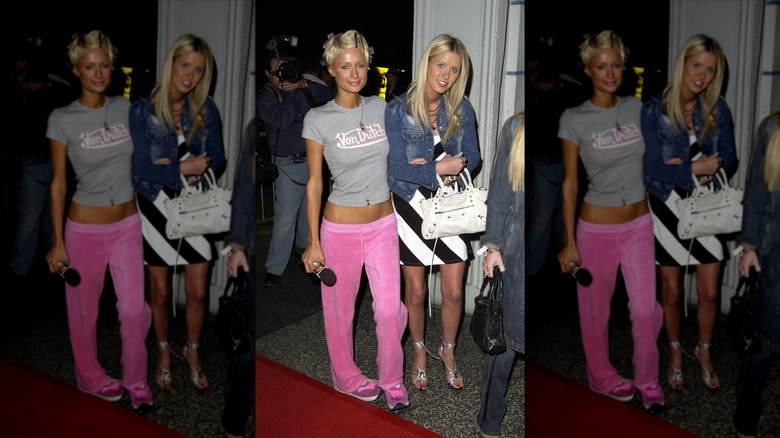
The early 2000s blended fashion trends from previous decades, reworking them into a distinctive aesthetic of its own. Flared jeans evolved into low-waisted silhouettes and cinched dresses were reimagined as bodycon dresses that were sculpted throughout. However, Juicy Couture tracksuits and oversized logos were fashion trends that undeniably belonged to the 2000s. Reality star Paris Hilton was a major fashion icon whose style helped popularize velour tracksuits. While interviewing celebrities backstage at a 2003 event in California, Hilton wore a cropped Von Dutch T-shirt and hot-pink velour sweatpants alongside Nicky Hilton.