

The Outdated Boomer Hair Washing Habit That Millennials Can't Stand
We may receive a commission on purchases made from links.
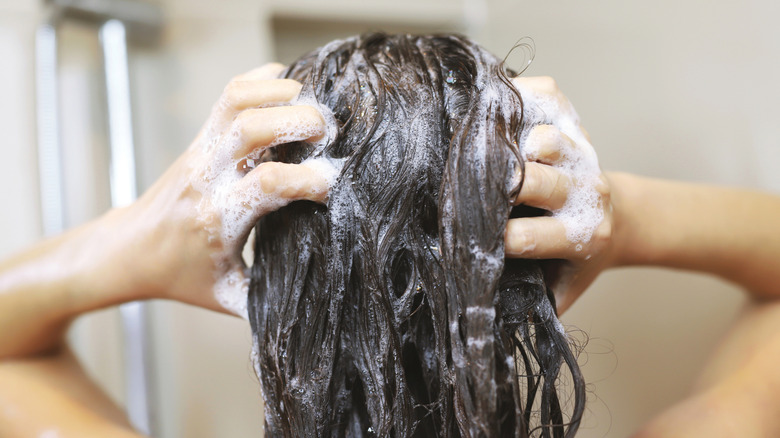
Millennials and boomers butt heads over plenty of topics, including workplace boundaries, mental health, and even avocado toast. The generational divide even extends to beauty. It turns out that they are even split on how frequently a person should wash their hair. While boomers are more likely to subscribe to the traditional practice of washing their hair daily, many millennials have embraced the idea that fewer washings — perhaps even just once a week — make for healthier hair.
Daily hair washing didn't become a cultural norm until the 1970s, partly due to an exploding market of hair care products that made home hair care and styling far more accessible. Many boomers grew up immersed in a world of shampoo ads, which might help to explain why they're more attached to the idea of washing hair every day. But millennials came of age during an era marked by dermatologists warning about the dangers of over-washing, as well as major advancements in dry shampoo technology.
In fact, millennials are the top consumers of dry shampoo, including products like The Dry Shampoo by Crown Affair which can help you go extra days between washes without any worry about greasy roots. "Washing daily feels too stripping for me," wrote one Reddit user. "I use dry shampoo towards the latter days if I'm going out or heading to the office." In general, it seems younger generations are more open to experimenting with new approaches to hair hygiene, including the reverse hair-washing technique or triple-washing hair for optimal results.
How often should you wash your hair? There's no one-size-fits-all answer

The reality is that the ideal frequency for washing your hair is largely determined by your hair type, scalp health, and lifestyle. Thick hair can often go longer between washes without looking limp or greasy. Meanwhile, some people find that washing too often actually becomes a vicious cycle that leaves their hair looking oilier. "If you wash your hair every day, you're removing the sebum," dermatologist Michelle Hanjani told NPR. "Then the oil glands compensate by producing more oil."
Even if your hair doesn't look greasy, skimping on washing can lead to hair damage. That's because your lifestyle can lead to harmful buildup. "It may look like the hair is clean, but with pollution, sweat, and tobacco smoke, the hair becomes saturated," stylist Rosi Fernández told Vogue. "Living in a city with a lot of pollution is not the same as living in the countryside. The climate, riding a motorcycle or a car, playing sports, the quality of the water used for washing, et cetera, also play a role." Those prone to dandruff might find they need to wash more often — or less often — to avoid a flare-up. Or, if you regularly work up a sweat at the gym, you may want to wash more often just to clean your scalp. Age can also be a factor, and there's plenty to know about how often you should wash your hair over 40. Ultimately, determining the perfect frequency is personal.