

5 Banned Books From The 1980s That Deserve A Spot On Your Reading List

We may receive a commission on purchases made from links.
Between Wall Street greed, the rise of Jazzercise, and some truly hideous eyeshadow colors, the '80s were a decade of individualism, celebrating the right to make whatever terrible decisions you wanted. They were also, ironically, one marked by brazen censorship efforts. There were the U.K.'s "video nasties," the Parent Music Resource Center's crusade against graphic song lyrics in the U.S., and countless other campaigns around the world.
That also meant it was a scary time to write a book. "Nineteen Eighty-Four" may have been fiction, but Big Brother was definitely watching the publishing industry, and he wasn't tolerating any political dissidence or unapproved kissing. Of course, some of the most controversial books are the ones most worth your time, so there's no reason not to bring the Reagan era back, at least to your bedside table. Hey, even some of those '80s hairstyles are making a comeback.
The House of the Spirits by Isabel Allende
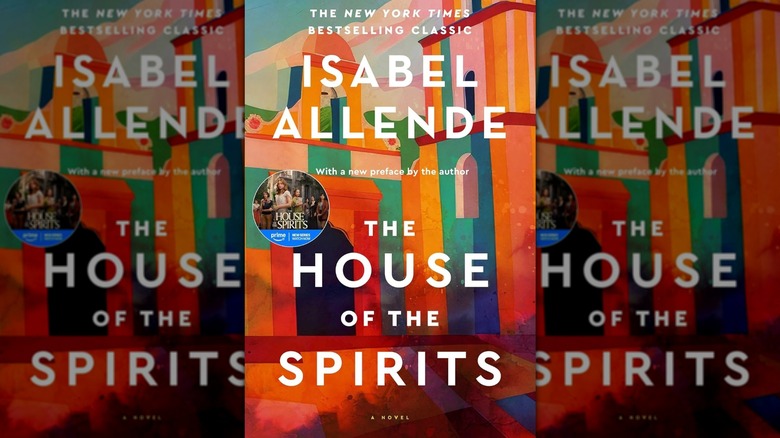
Isabel Allende's pioneering work of magical realism, "The House of the Spirits", tells the story of three generations of women and the consequences they suffer for marrying or being born into a family headed by a wealthy, brutal patriarch. One of them happens to be clairvoyant, but that doesn't mean she can hold back the tide of violence against her and her daughters. It all culminates in a military coup that catches one of the family's youngest members in its gears, changing the trajectory of their history.
Although Allende wrote "The House of the Spirits" based on her own family, which included Chilean President Salvador Allende, not everyone appreciated her depiction of the Chilean government — specifically, the Chilean government. They banned the book upon its 1982 publication, but that didn't stop it from winning the country's award for Best Novel of the Year. It soon became recognized as such an important work that it was taught in schools around the world, but Allende only caught more flak from parents in the U.S. and other countries for the sexual content and violence depicted in her book.
The Unbearable Lightness of Being by Milan Kundera
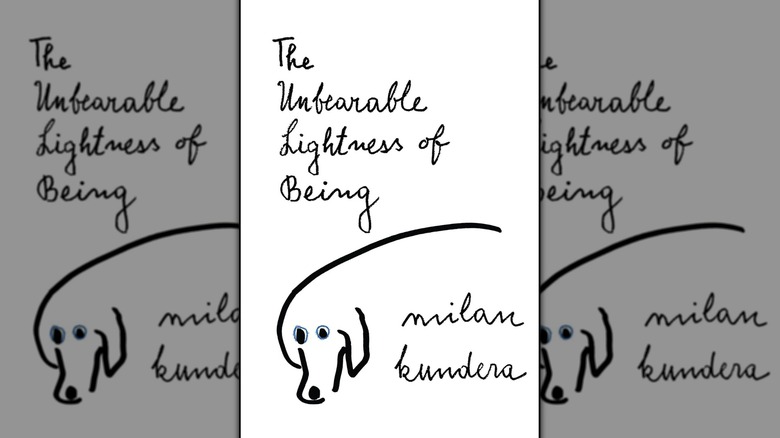
Milan Kundera's most famous novel is primarily a work of philosophy, but an undoubtedly sexy one. It's about a man who believes the key to life is never forming attachments to anyone or anything, especially the numerous women he beds, hence maintaining a "lightness." Nevertheless, he falls for a woman whose philosophy differs greatly, to say the least, and things get complicated as they struggle with their relationship in tandem with the realities of living in communist Czechoslovakia.
With all that sheet shaking, you might assume "The Unbearable Lightness of Being" was banned on sexual grounds, but no. Kundera became persona non grata in his home country in the late '60s when he showed unabashed support for the Prague Spring movement, and his work was removed from libraries and bookstores while he fled to Paris. The ban was lifted with the fall of Communism in 1989, and Czechs finally got to read what is now considered one of the greatest novels of all time, five years after its initial release.
The Color Purple by Alice Walker
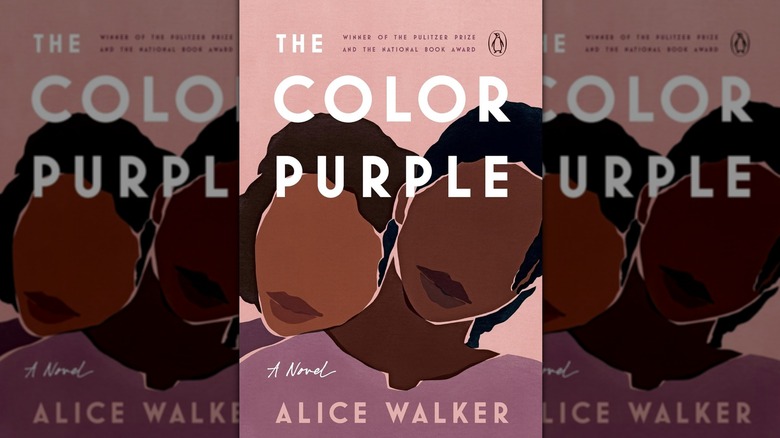
Many remember "The Color Purple" as a beloved story of sisterhood between Black women in early 1900s Georgia, but they might be surprised to learn that it's one of the most challenged books of the last 50 years. After all, it won both the Pulitzer Prize and the National Book Award for Fiction after its release in 1982. So what exactly do readers find so objectionable about Celie Harris's journey from an abused youth to an independent, actualized woman?
A lot, it turns out. Let's start with that abuse, which is often sexual in nature in "The Color Purple" and described with the brutality it imparted. Physical abuse is also rampant, which led some readers to object to the depiction of Black men as violent misogynists, while a sexual relationship between two women rattled conservative groups. Some even found Alice Walker's stylized spelling choices offensive, making "The Color Purple" one of the few books banned at least partially on the grounds of pedantry.
Spy Catcher: The Candid Autobiography of a Senior Intelligence Officer by Peter Wright
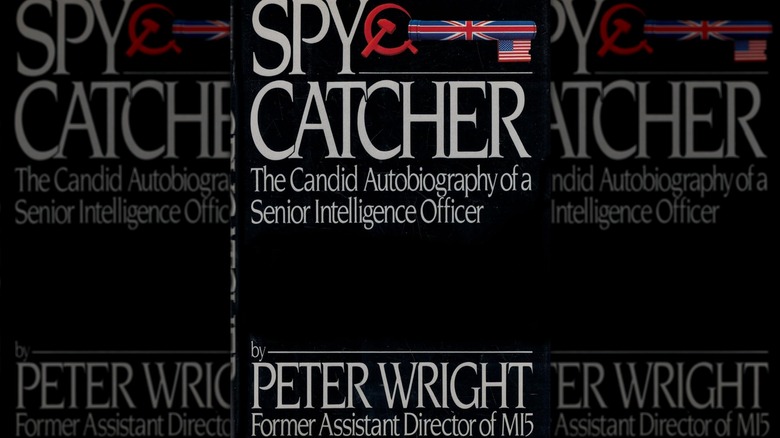
Unlike the general political and obscenity concerns that usually lead to a book's banning, there was a very specific reason the British government tried to block the 1987 book "Spy Catcher: The Candid Autobiography of a Senior Intelligence Officer". As you might have gathered from the title, Peter Wright was an ex-MI5 agent, and his book contained some explosive allegations, including claims that Director General Roger Hollis was a double agent working for the Soviets and that British intelligence tried to destabilize Prime Minister Harold Wilson's administration. Citing national security, the government banned the sale of the book in the UK and even newspapers from reporting on its contents.
In the end, the move didn't work out great. They couldn't control the publication of "Spy Catcher" in other countries, and by the next year, the information within its pages was so publicly available that they dropped the ban. In the meantime, all that controversy propelled "Spy Catcher" to an unlikely, yet earned, bestseller status. While Wright's claims and memories of events are questionable, reviewers have described "Spy Catcher" as an enchanting page-turner that provides a fascinating look at the inner workings of government intelligence.
The Satanic Verses by Salman Rushdie
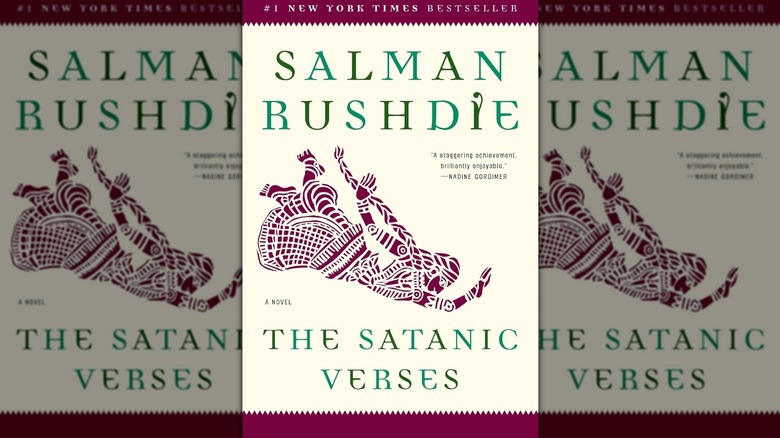
It seems immediately clear why a book called "The Satanic Verses" provoked outrage. In fact, you may only know Salman Rushdie's most notorious title in the context of the backlash from Muslim communities to its contents, assuming the book is an attack on Islam. However, the 1988 novel tells the story of two Indian-British immigrants saved from a plane crash in a miraculous and spiritually life-altering way. The controversy stems from a series of dream sequences that depict historically disputed details of the life of the Prophet Muhammad, including the time he was purportedly tricked by Satan into briefly promoting polytheism, resulting in the aforementioned verses.
That was enough to put a price on Rushdie's head — literally. In addition to the book being banned in several countries, the Supreme Leader of Iran at the time issued a fatwa calling for the writer's assassination, forcing Rushdie into hiding for the next decade. In 1998, Iran relented that they would merely 'neither support nor hinder assassination operations on Rushdie,' and as recently as 2022, he was attacked at a speaking event. He lost sight in one eye and the use of one hand, which is relatively lucky, as others involved in the publication or translation of "The Satanic Verses" have been straight-up killed. As far as we know, no one has been harmed for reading it, so it's up to you if the book hailed as "Rushdie's largest aesthetic achievement" is worth the risk.