

5 Of The Best Books By Margaret Atwood That Aren't The Handmaid's Tale
We may receive a commission on purchases made from links.
"The Handmaid's Tale" was a watershed moment in dystopian fiction and Margaret Atwood's career. Though it was published in 1985, it's still relevant today, and its description of the totalitarian state of Gilead propelled Atwood to the same literary echelon as George Orwell and Aldous Huxley. Its title has become shorthand for the erosion of women's rights and encroachment of religious control in much the same way many understand the reference to Orwell's "1984" when referring to mass surveillance as 'Big Brother'.
But "The Handmaid's Tale" is hardly the entirety of Atwood's resume. She's published 17 novels, three graphic novels, 12 nonfiction books (including one of the best memoirs of 2025), nine pieces of short fiction, 26 poetry collections, and a theatrical adaptation of her book, "The Penelopiad". She's also penned numerous works for smaller publishers and university imprints. For those dipping their toes into the non-Gileadian parts of Atwood's bibliography, we have good news: Much of her work contains similar themes, devices, and even characters that "Handmaid's Tale" fans have come to love. If you're not sure where to start, seek guidance under our eye.
5. The Edible Woman

The commodification of women is a theme explored throughout Margaret Atwood's entire bibliography, not just "The Handmaid's Tale." As you can imagine, based on the title, 1969's "The Edible Woman" is one of Atwood's tomes that takes the idea to its furthest extreme. The protagonist of Atwood's first novel is Marian, a young woman committed to living a socially sanctioned life with her boring fiancé — that is, until two things happen.
First, through her job in market research, Marian meets a bizarre man who seems to care little for social norms and expectations. More troublingly, she begins to feel that her fiancé is consuming her. She feels as if parts of her body are disappearing, and she overidentifies with food to the point that she can't bring herself to ingest anything but vitamins. Will Marian break free from her suffocatingly ordinary life? Or will she allow it to chew her up and swallow her whole?
4. Cat's Eye
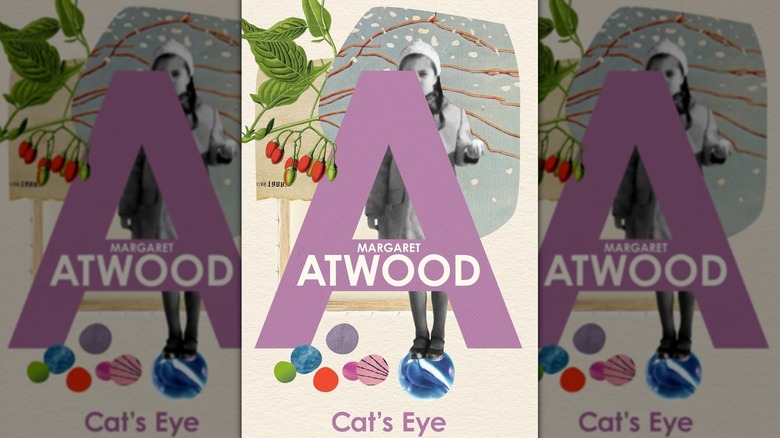
If you thought the most interesting part of "The Handmaid's Tale" was the dynamics between the handmaids — their alliances and rivalries, teaming up or tearing each other down to survive — or their betrayal at the hands of other classes of women, "Cat's Eye" is an Atwood novel you'll want to read next. It's about Elaine, a "weird girl" unschooled in the ways of girlhood due to a childhood spent traveling with her entomologist father, whose lack of sophistication is exploited by the cruel and dominating Cordelia.
As the girls grow, however, the tables turn: Cordelia becomes troubled, while Elaine thrives. Elaine has a choice to make — use Cordelia's weakness against her as she'd always used Elaine's, or be the bigger person. Spoiler: She doesn't exactly cover herself in glory. (Atwood, whose own father was an entomologist, has confirmed that the many similarities between the novel and her own childhood are no coincidence.)
3. Alias Grace
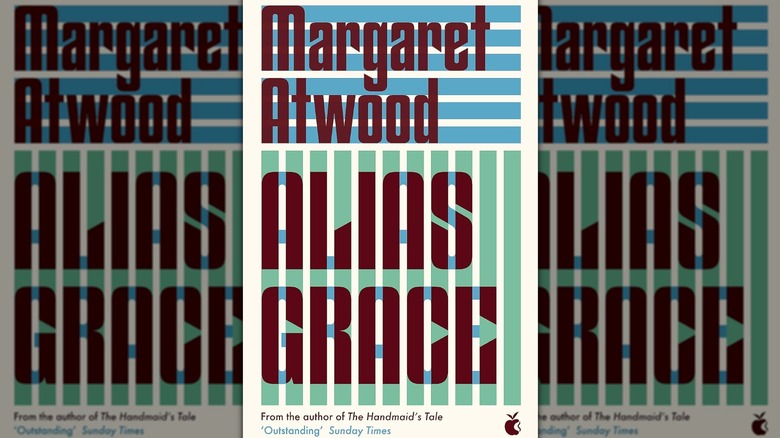
When we meet Grace Marks in "Alias Grace," she's come to tell us her life story, much in the same manner as Offred in "The Handmaid's Tale." Also, like Offred, she's a prisoner, though somewhat more overtly. In 1843, the 16-year-old Irish immigrant was working as a servant in the home of a man who turned up dead, along with his housekeeper/lover, and Grace took the blame. More than a decade later, her supporters are hoping that, with the help of the psychiatrist interviewing her, they can secure her pardon.
But Grace differs from Offred in one crucial aspect: She can't be trusted. Though she claims to remember nothing of the murder that her alleged co-conspirator insisted she orchestrated, her reliability as a narrator is constantly called into question. "Alias Grace" is based on a true crime event that occurred in 19th-century Canada, marking the deaths of Thomas Kinnear, who was shot, and Nancy Montgomery, who was killed with an axe. Historical fiction might not seem like an obvious companion to "The Handmaid's Tale," but as Atwood has pointed out, nothing in that novel is all that futuristic.
2. The Year of the Flood
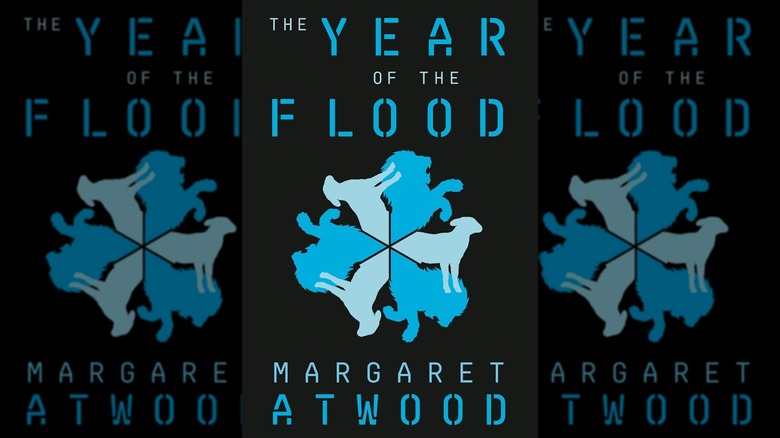
If post-apocalyptic religious cults are your jam, let "The Year of the Flood" be your DJ. It follows a pair of women with connections to God's Gardeners — a religious movement — in the wake of the virulent pandemic the cult (sort of) foretold. Like the Sons of Jacob in "The Handmaid's Tale", God's Gardeners formed to fight back against a consumerist environmental crisis, though they're both much more benevolent and much less effective, occasionally to the point of comedy.
What's more important, however, are the perspectives of the two women, who had both left the cult by the time the plague hit. Like "The Handmaid's Tale," their stories of survival are worlds more interesting than the narratives of man-children populating the novel. Speaking of whom, "The Year of the Flood" is the second volume of a series beginning with Atwood's novel "Oryx and Crake," but it's more of a companion than a sequel, and you don't have to read the first one before diving into the second.
1. The Testaments
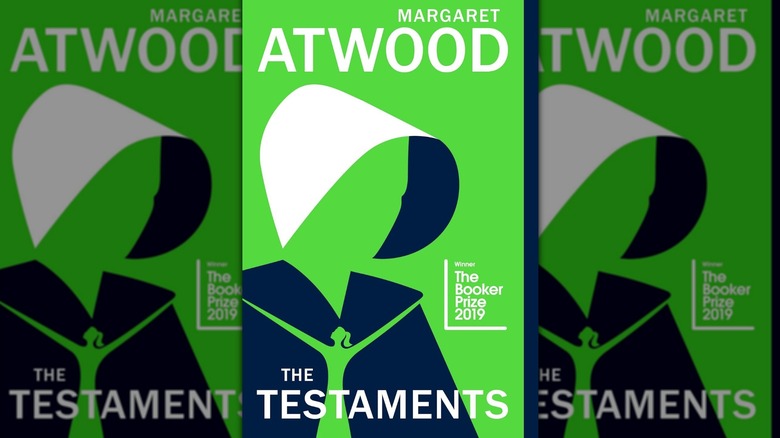
Of course, readers of "The Handmaid's Tale" — and especially viewers of the Hulu Originals series — won't want to miss Atwood's continuation of Offred's story in "The Testaments." While the first novel ends with a pregnant Offred being marched away to an uncertain fate, viewers of the show watched her give birth to a baby girl named Nicole, who was smuggled to Canada. Nicole figures prominently into the plot of "The Testaments," as does Offred's older daughter, Hannah (now called Agnes).
The specter who really haunts the story, however, is Aunt Lydia. While she was once a literary villain known for her inescapable brutality, "The Testaments" reveals a different side to the woman many consider to be the bad guy of "The Handmaid's Tale." It's a good thing, too, because that gives the incomparable Ann Dowd the opportunity for even more Emmy-award-winning work on Hulu's "The Testaments," which premiered in April 2026. But take note: You'll definitely want to read the book first.
How we selected the best books by Margaret Atwood that aren't The Handmaid's Tale

We pored over Margaret Atwood's bibliography and compiled a list of titles that share themes, narrative elements, and other similarities to "The Handmaid's Tale". Specifically, we noted common themes of women's oppression, gender dynamics, environmental disasters, and religious extremism, as well as gripping first-person biographical accounts, apocalyptic plots, and shared characters. We eliminated short story collections, poetry, and nonfiction titles in favor of novel-length fiction. We then sorted this list from lowest to highest based on an average of Goodreads reviews.