

What Is 'Ozempic Neck'? The Latest GLP-1 Side Effect, Explained
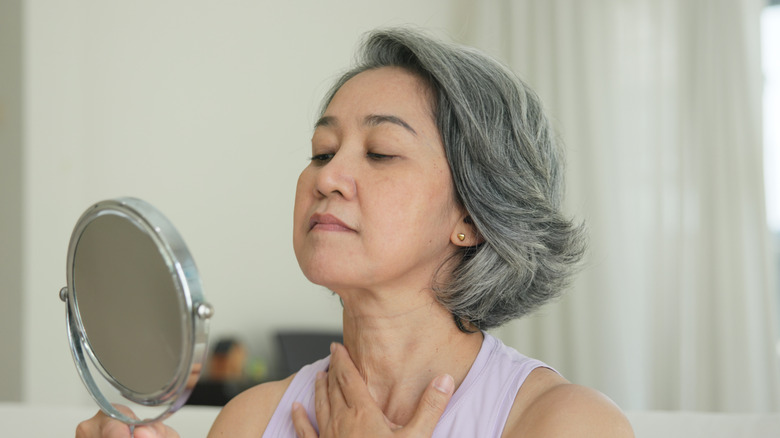
Despite the many celebs who have fallen victim to Ozempic face, GLP-1s are still all the rage, and there's another side-effect that has plagued those on the weight-loss drug — Ozempic neck. If you're wondering what that is, the founding physician of Misra Wellness, Dr. Sulagna Misra, exclusively explains to Women, "The fat in your neck and lower face has been acting as scaffolding your entire life. On these medications, that scaffolding disappears faster than the skin can adapt. The skin doesn't have time to retract, and depending on your age and overall skin health, it may not have the capacity to retract either." And, when those elements happen, you're met with a sagging, wrinkly neck.
In addition to losing fat too quickly, the loss of a very important protein while on semaglutides has also caused several celebs to fall victim to Ozempic neck. According to Dr. Misra, collagen production can be affected while on GLP-1s, which can lead to crepey skin. "Some patients may be losing structural support from two directions simultaneously: The fat underneath and the collagen within. And collagen production only gets harder with age, so the age at which someone starts these medications genuinely matters for their outcome," she shares. While getting Ozempic neck is not an ideal side-effect, there are some non-invasive treatments, but those with dramatic fat loss may have to go under the knife to regain their skin's elasticity.
It may take some work to reverse Ozempic neck
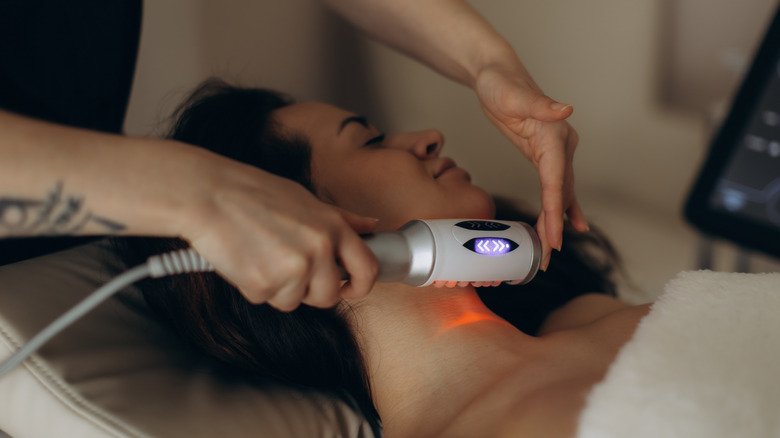
Reversing the effects of Ozempic on your neck all depends on your skin health. "Skin has memory, but it has limits, and those limits get less forgiving with age," Dr. Sulagna Misra exclusively tells Women. She adds, "Significant laxity doesn't just bounce back on its own. The degree of natural retraction depends on age, baseline skin quality, genetics, environment, sleep, prior procedures, and how fast the weight came off." If you're looking for treatment, the board certified specialist says, "For mild to moderate laxity, we have good nonsurgical options including radiofrequency, microfocused ultrasound, and biostimulatory injectables like poly-L-lactic acid, which triggers your own collagen production rather than just adding volume."
Those who are experiencing more dramatic Ozempic neck may want to consider a face-lift or blepharoplasty, but should do so after researching the risks of plastic surgery. And, The Centre For Cosmetic Surgery shares that a neck-lift is also possible for getting rid of excess skin. However, Dr. Misra advises that it's best to reach your goal weight first before going under the knife, as well as talking to your doctor before thinking about getting off GLP-1 meds, as the benefits may outweigh the risks.
Going slow with your weight loss can prevent Ozempic neck
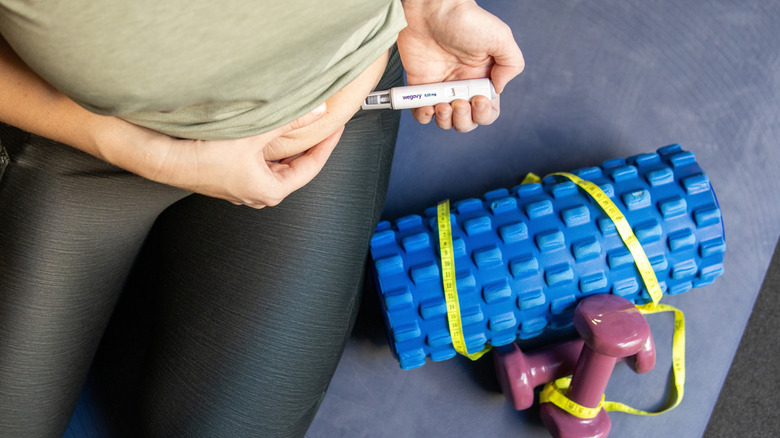
Shedding pounds may be your primary reason for taking semaglutides, but going too fast is likely going to give you Ozempic neck. "Losing more than about 5% of body weight per month is where we see the most pronounced skin changes," physician Dr. Sulagna Misra exclusively shares with Women. "Going low and slow is NOT failure. It's smart medicine and even preferred," she says. That means starting out at the lowest dose possible for your needs, which will be decided by your healthcare provider. According to endocrinologist Vinni Makin, the recommended weight loss goal is about one to two pounds per week, compounded with regular workouts and a focus on nutrition, per the Cleveland Clinic.
Because GLP-1s decrease appetite, it's important to make sure you're getting enough protein. "People need roughly 80 to 100 grams per day. Your skin needs those building blocks to remodel during weight loss, not just your muscles," Dr. Misra tells Women. In addition to healthy eating, skincare and hydration is key for preventing any skin issues. And, follow-ups with your doctor is important for your physical and mental health. "Medical weight loss is not just handing someone a syringe and sending them home. The regular check ins, the honest conversations, the attention to how someone feels about their body at every stage, that's the medicine," Dr. Misra states.