

How Often Should You Wash Your Hair Over 40? Everything To Know
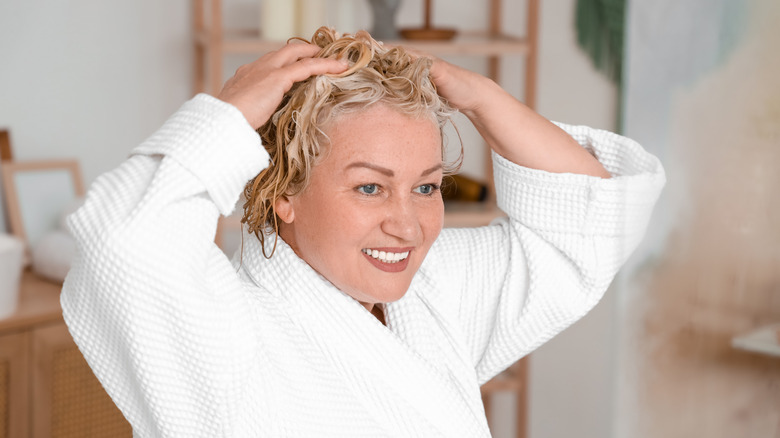
There's nothing like taking a long shower and coming out of the bathroom feeling like a brand new person. However, we all know that washing our tresses every day isn't recommended, especially for those with dry or common curly hair problems. "How often you should wash your hair depends on your hair's type and texture. Those with coarse, coiled, tightly curled locks should wash their hair at least every two weeks," dermatologist Shilpi Khetarpal told Cleveland Clinic. The expert added, "Those with finer hair should wash their hair at least every other day. And people with oily/greasy scalps may opt to wash their hair daily if it bothers them." And, if you're over 40, you should avoid over-washing even more. According to Dr. Khetarpal, the older you get, the less oil your body produces. "Your oil glands are under the control of androgens (male sex hormones). This is why younger people typically have more active oil glands, since their hormone levels are higher," she stated. As women hit menopause, oil production decreases, leading to drier hair.
How you wash your hair matters as well. Concentrate the shampoo on the scalp only, and massage your head well, letting the suds run over the rest of your hair, instead of lathering your strands. "People in their 40s and 50s who are still washing their hair and scrubbing themselves as if they were teenagers are really damaging their skin. It takes a long time to fix that," dermatologist Elizabeth Hughes shared with Healthline. Additionally, you may want to rethink your products at this age, as certain ingredients can do more harm than good.
Skip the sulfates if you're over 40

While silicones and sulfates in haircare serve a purpose, you'll want to rethink using certain ingredients if you're over 40. "Sulfate-free shampoos are less harsh and won't strip the hair of natural oils, helping to maintain moisture and reduce dryness," hair expert Colin Ford explained to CNN. And while you might not get the same lather as shampoos containing sulfates, you'll still be left with a clean scalp and strands, but without the damage.
According to Hers, other ingredients to avoid are parabens, phthalates, and selenium sulfide, which can be a contributing factor to hair loss, so be sure to look at the shampoo bottle, especially if you have gray hair. Conditioners are just as important, and you'll want to spend more than a few seconds running one over your strands, so take time to really work the product in before rinsing. It may take a bit of effort to find the new perfect shampoo and conditioner for you, but remember, eliminating these chemicals will only do your hair and body good.