

Rep. Debbie Wasserman Schultz Called Out The Backhanded Compliment Every Curly Girl Has Heard
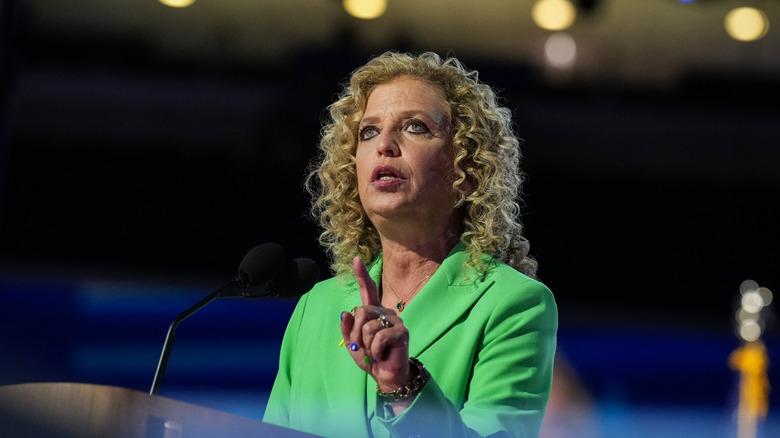
Sometimes being a woman in politics means dealing with unwarranted comments that have little do with your actual job. Debbie Wasserman Schultz experienced this firsthand. On an episode of the podcast, "We are Spiraling," she recalled her early days in politics and how established women told her she needed to "do something" with her natural curls, and show up with "a more professional look." It's the same backhanded compliment so many curly-haired women hear: you look better when your hair is straight — a pressure even someone like Nicole Kidman, who has naturally curly hair, has dealt with.
Eventually, Wasserman Schultz did, in fact, have her straightened. But the reactions from colleagues didn't sit right with her. While they all thought her flat-ironed looked great and told her she "should wear [her] hair like that all the time," the underlying message was hard to miss: her straight hair looked more professional than curls. Her then-colleagues likely meant well, but for the Florida representative, it felt like being asked to fix a part of her identity.
One day, Wasserman Schultz decided to no longer conform to what others expected of her. She stopped straightening her hair. It was a quiet but firm clap back and a reminder that looks never define an individual's competence and professionalism. On the podcast, she reiterated this, "I would never, ever, ever change my hair now..." Unfortunately, Wasserman Schultz's experience is far from unique; it's part of a broader social pattern curly-haired women face across all industries.
The backhanded compliment isn't just limited to politics
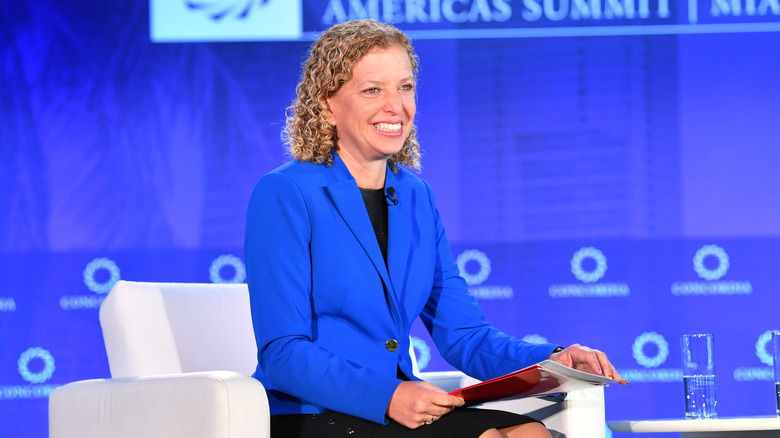
From the sets of Hollywood films to corporate boardrooms, women with natural curls continue to face backhanded compliments implying their natural hair texture isn't appropriate in the workplace. It's likely why there are so many celebs you probably didn't even know actually have naturally curly hair. A 2023 study from Lindenwood University found that there is in fact a measurable workplace bias against curly haired women, as it indicated straight-haired women were perceived more favorably when it came to job performance.
On Reddit, there are countless posts dedicated to discussing curly hair in the workplace. One post stood out as it echoed the U.S. Representative's experience almost exactly. The poster described how their coworkers had initially praised her curls, only for a colleague to switch tones the moment she walked in with straightened hair. The colleague told her that her hair should always be styled this way "to match with the executives." He then went on to say something that implied women with frizzy hair don't look put together.
While the Redditor knew her colleague wasn't trying to be mean, the comment lingered. She loves her curls, yet admitted she just may end up straightening her hair because she felt undermined. It's a familiar reaction for many curly-haired women. That one comment can make many women rethink something as personal as their natural texture, so Wasserman Schultz's choice to keep her curls despite the criticism speaks volumes. And, really, in politics, there are far more important questions to focus on than a woman's physical appearance, like, what does abortion access look like today?